



Top Garage Door Failures in Southwest Florida
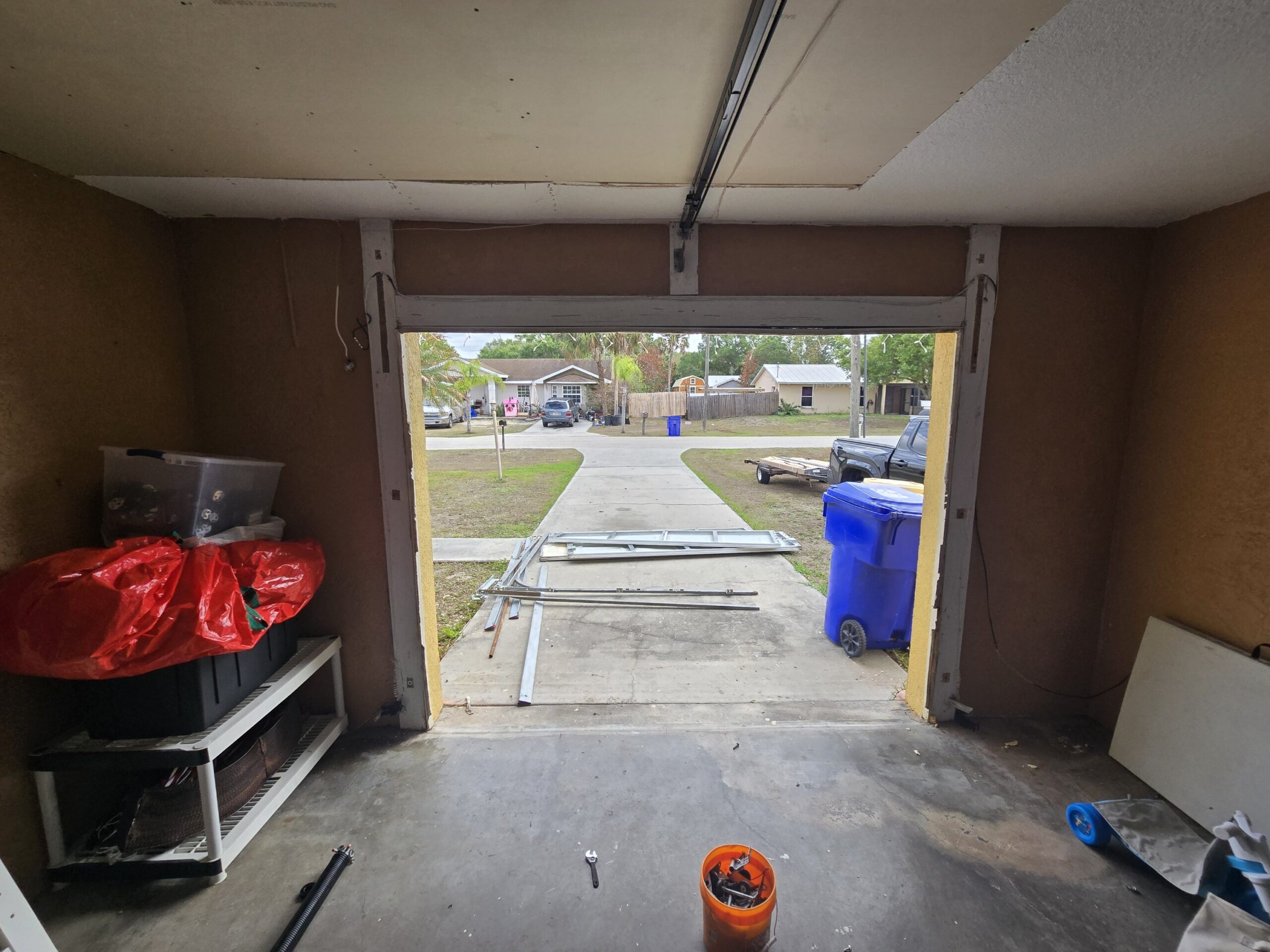
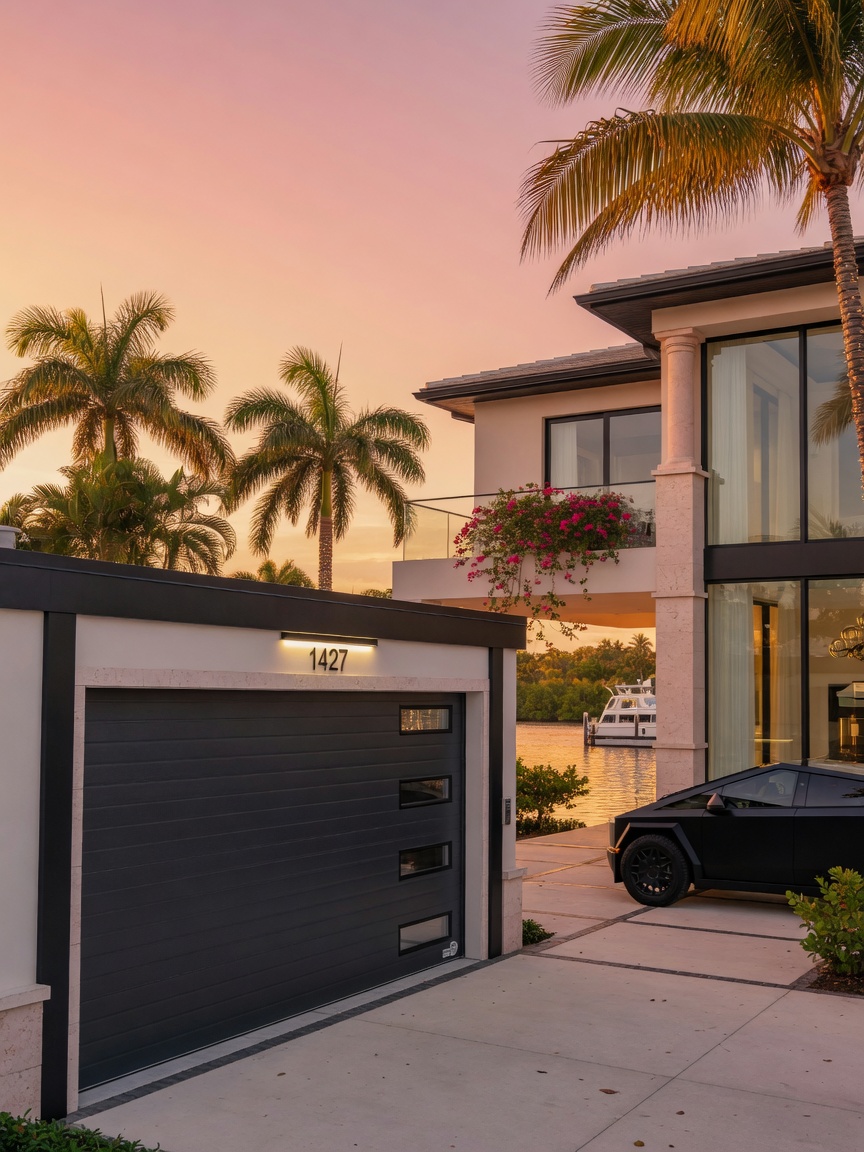
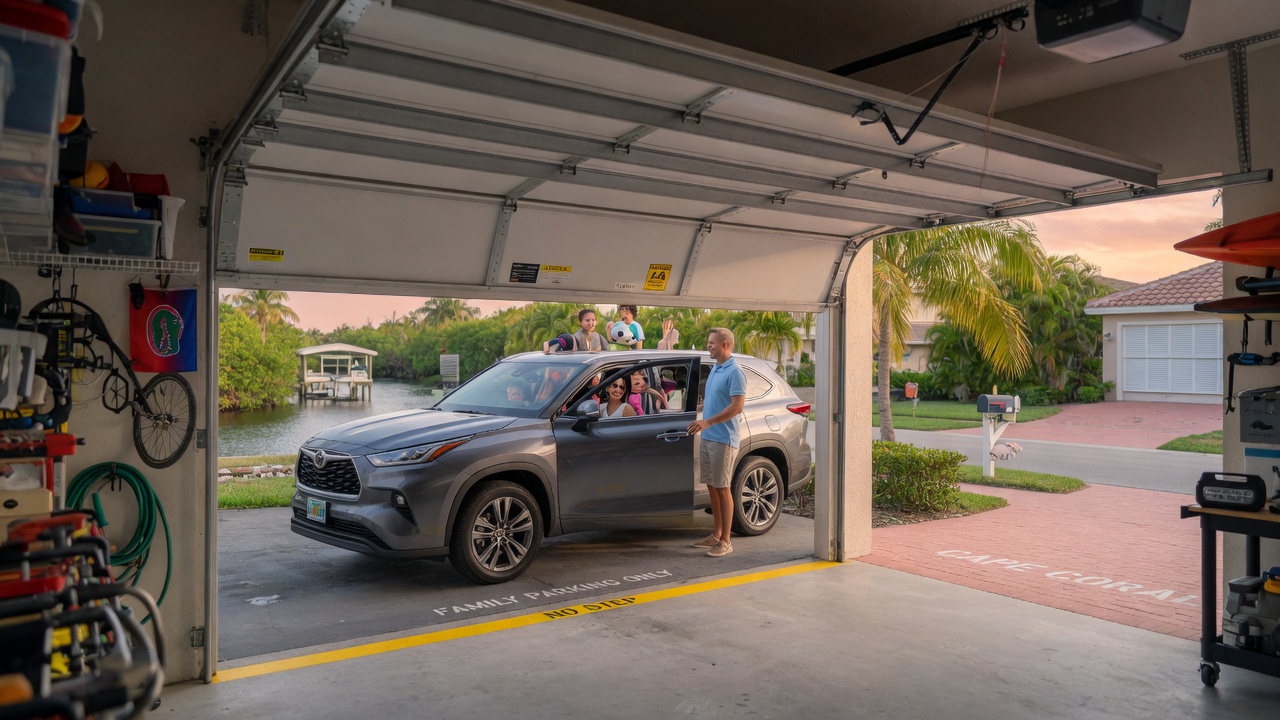
Living in Southwest Florida means enjoying beautiful beaches, warm weather, and unfortunately, accelerated wear on everything metal around your home—including your garage door. The combination of relentless humidity, salt-laden sea air, and powerful tropical storms creates a perfect storm for garage door problems southwest florida residents face every year.
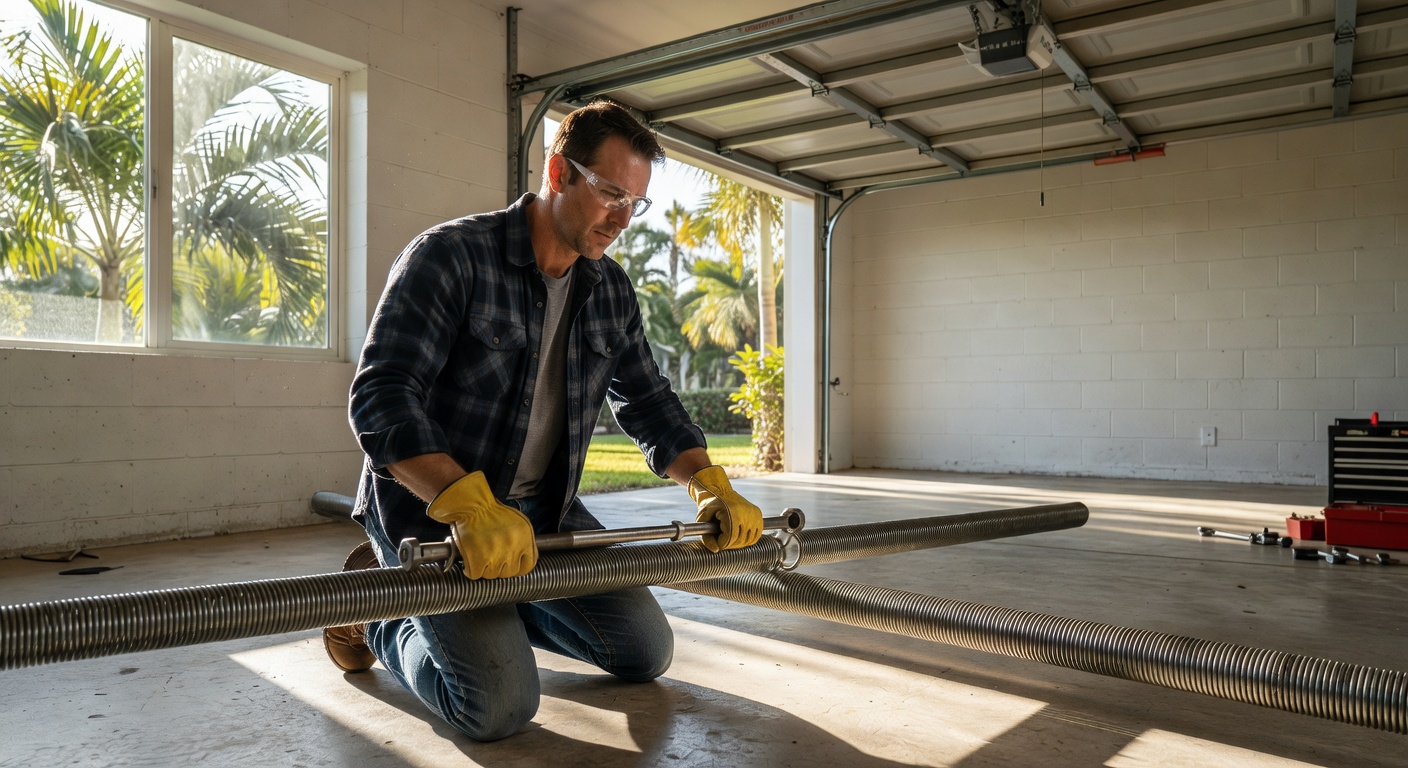
While national repair guides talk about generic issues like broken springs or off-track doors, they rarely address the climate-specific failure modes that dominate in Cape Coral, Fort Myers, Naples, and surrounding SWFL communities. This guide fills that gap with practical, localized information so you can diagnose issues before picking up the phone for swfl garage door repair.
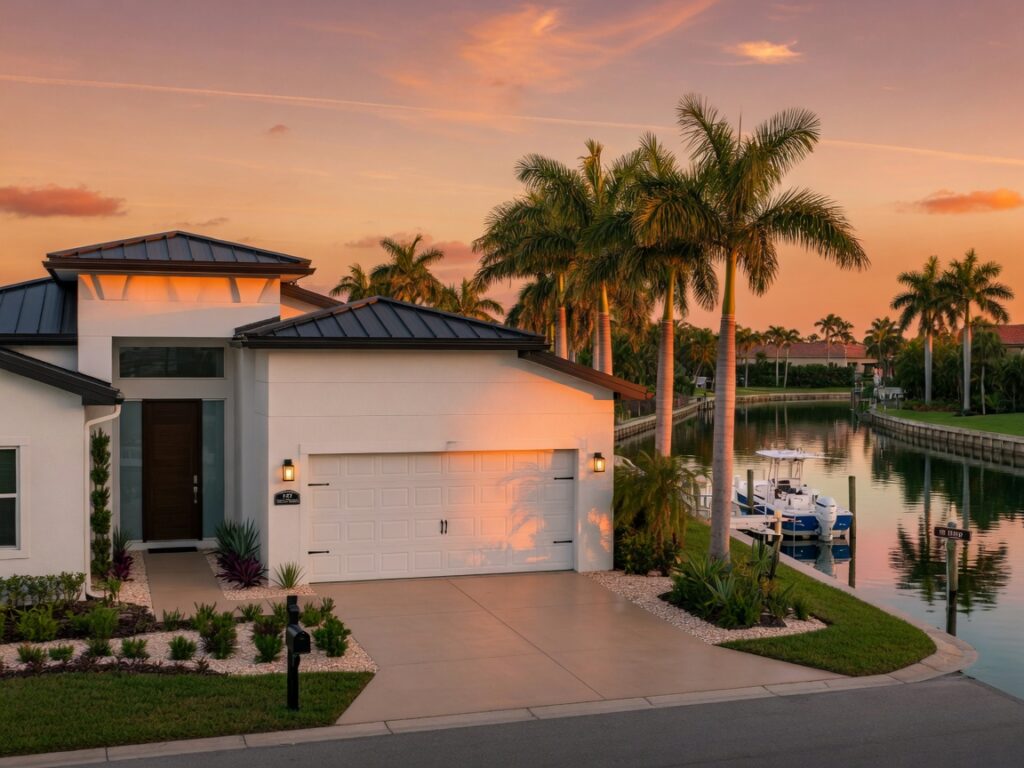
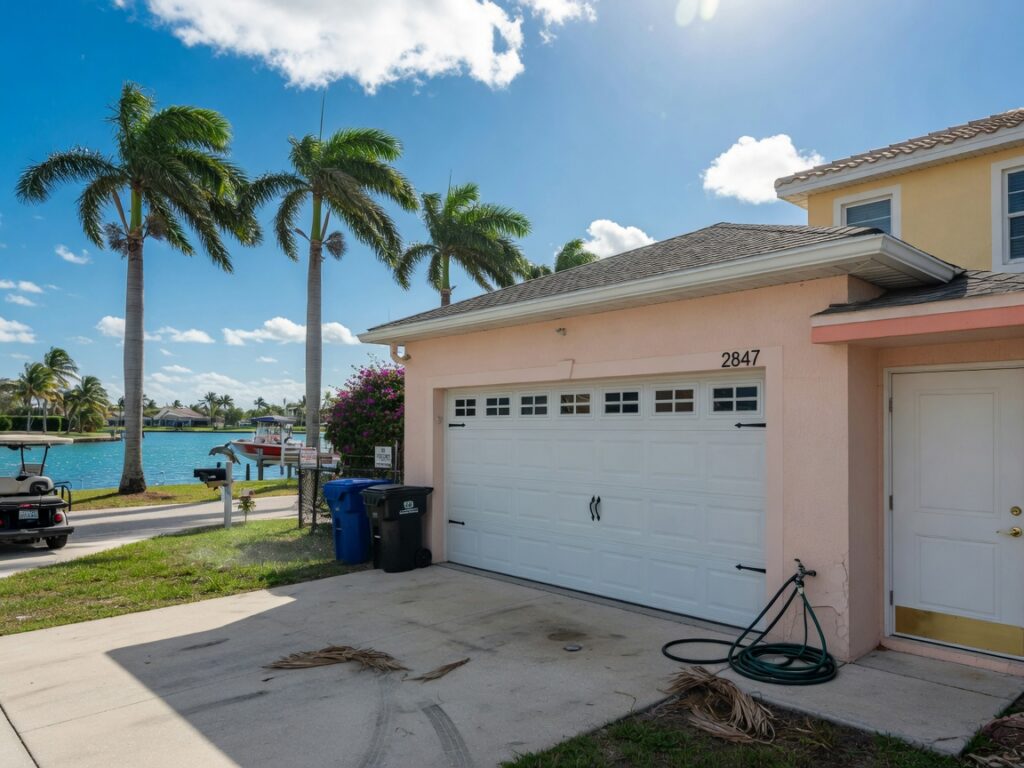
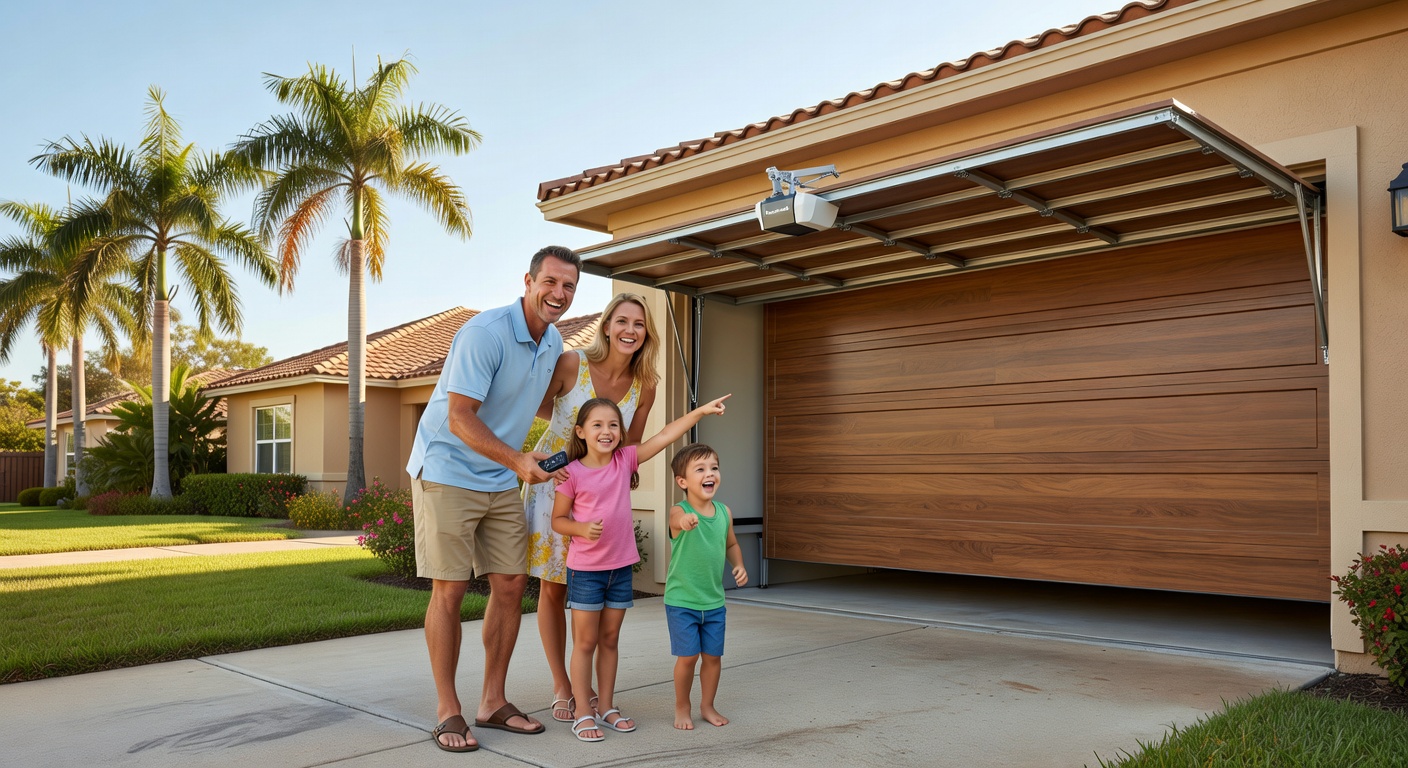
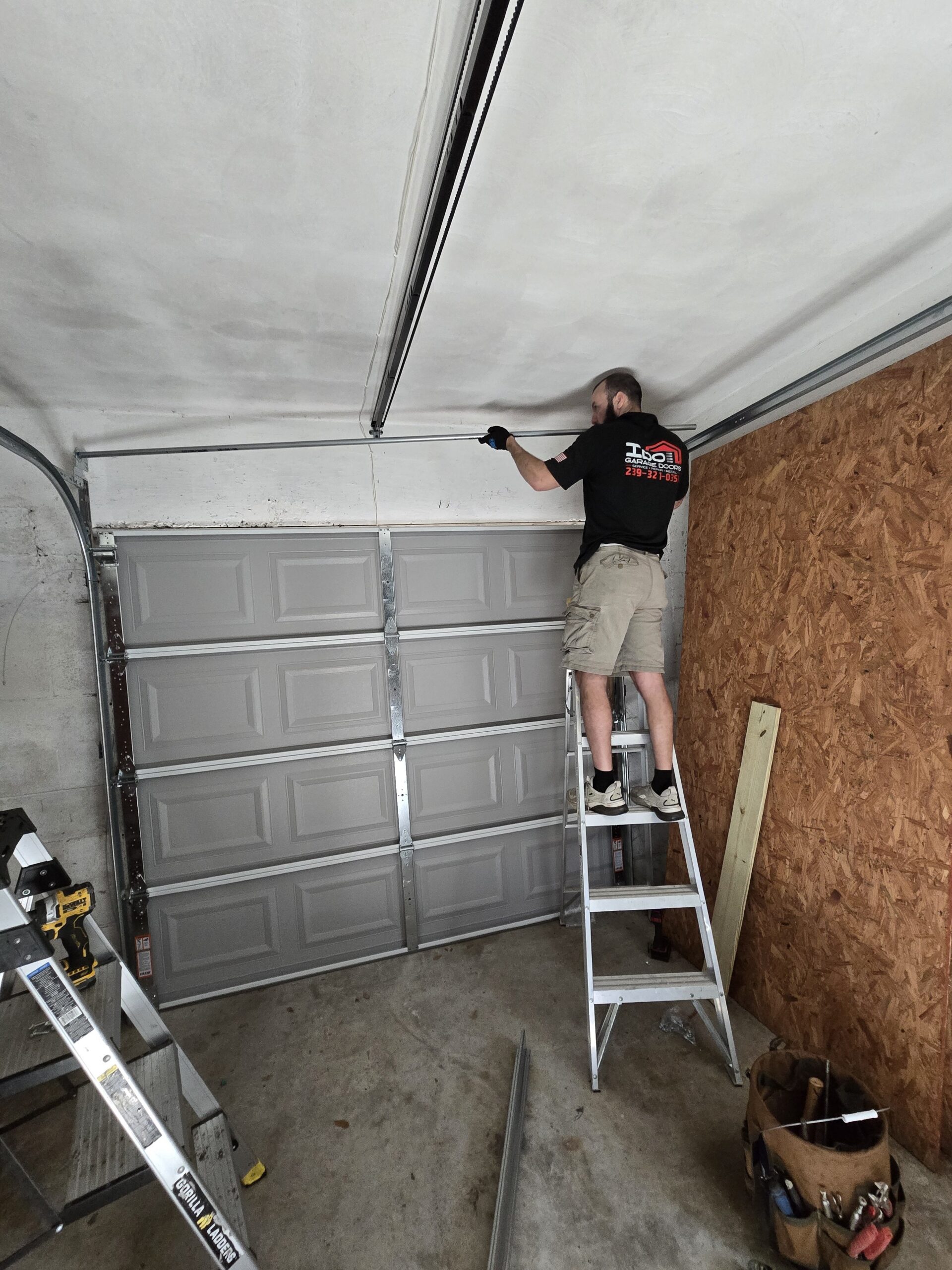
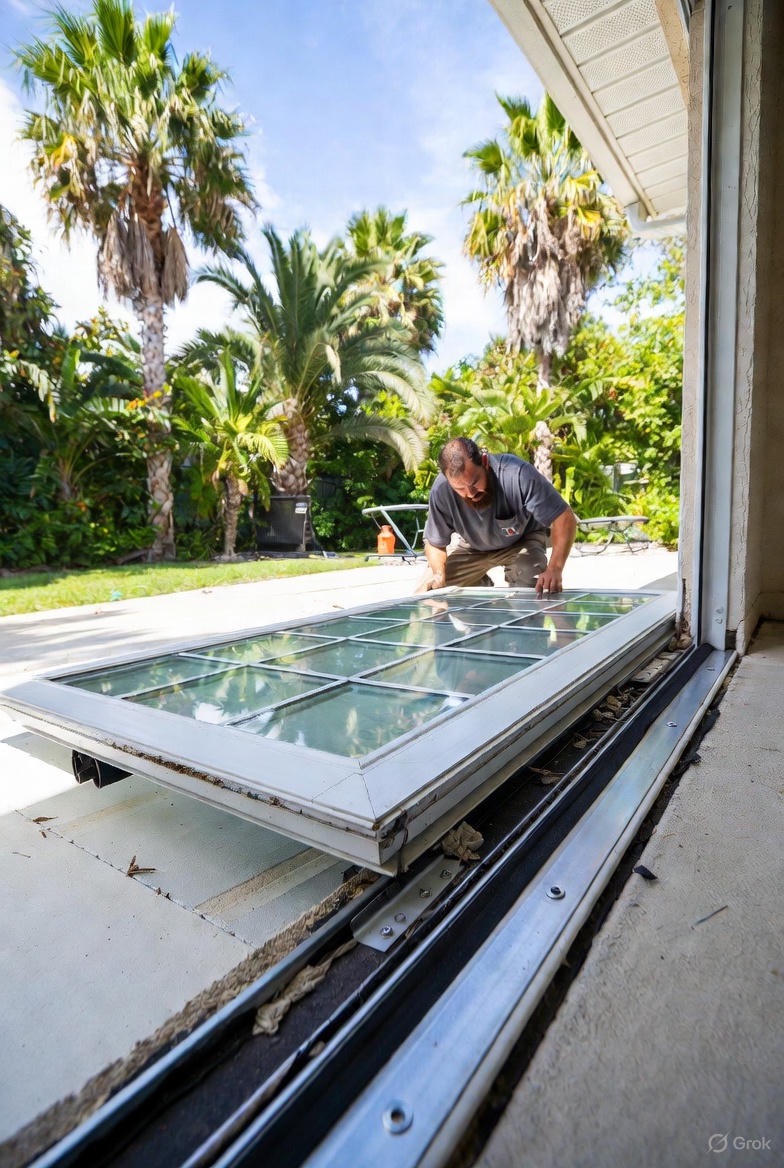
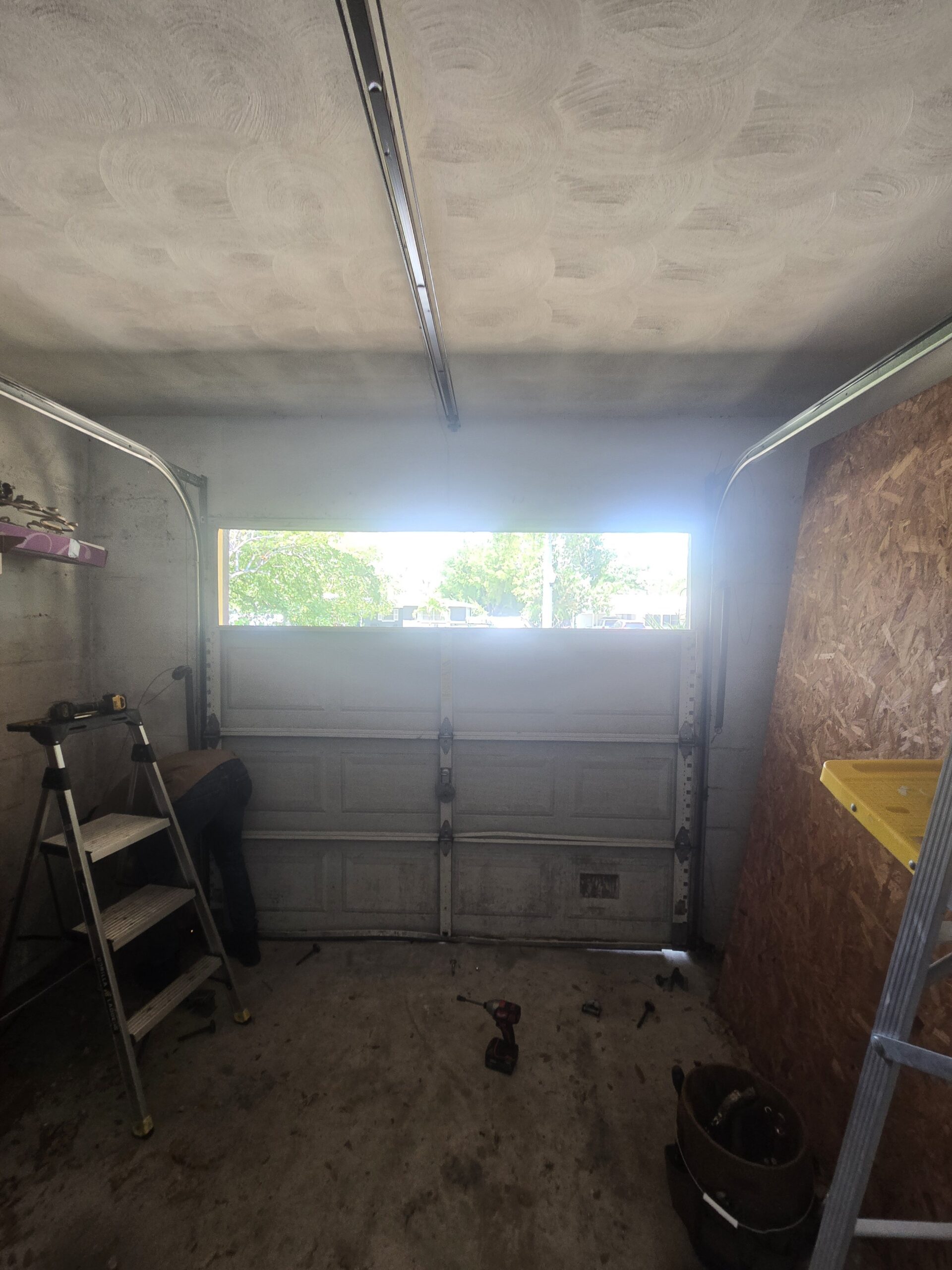
Image Grid 1
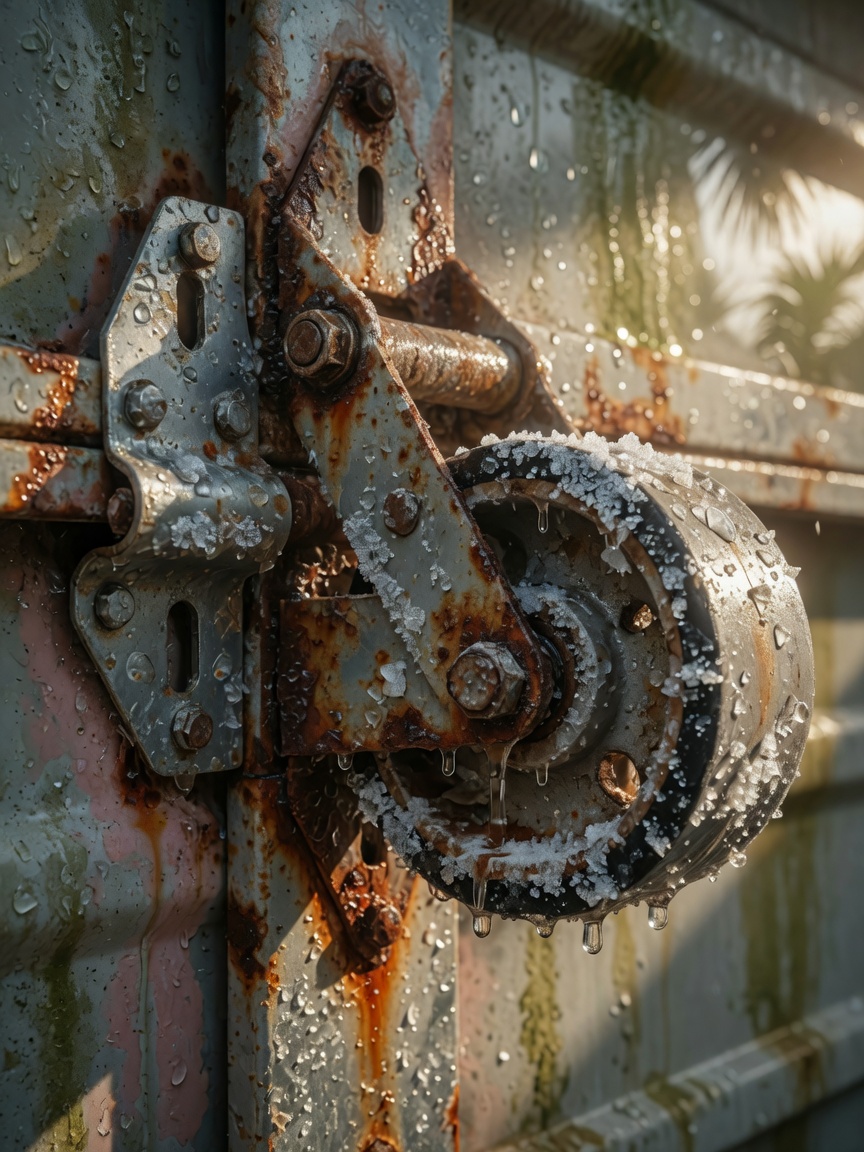
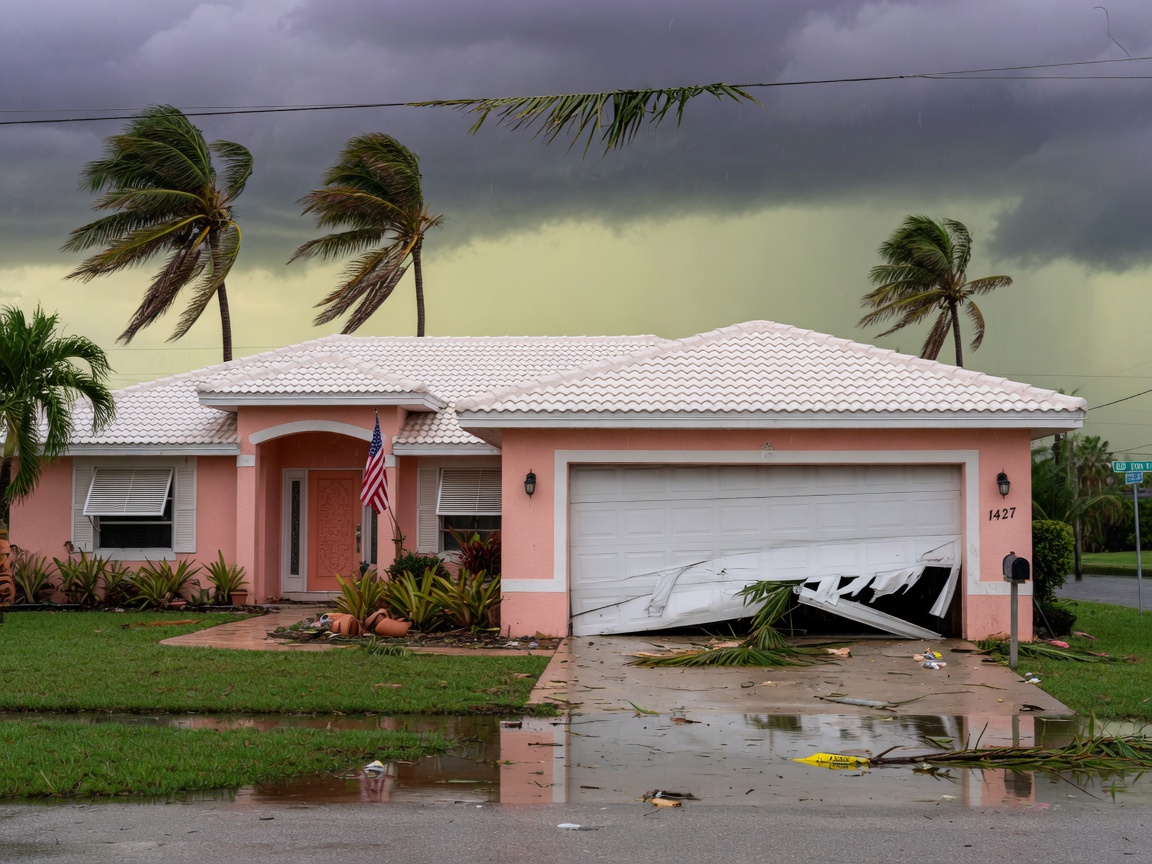
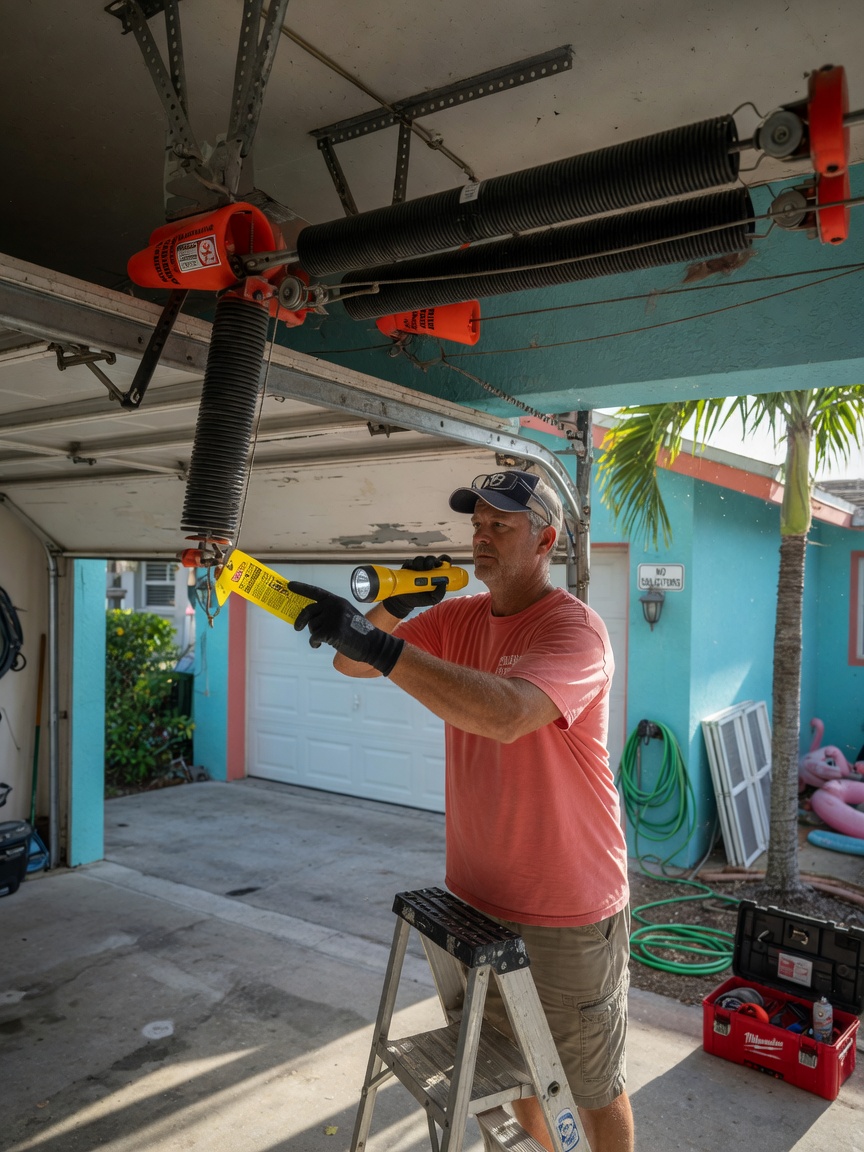
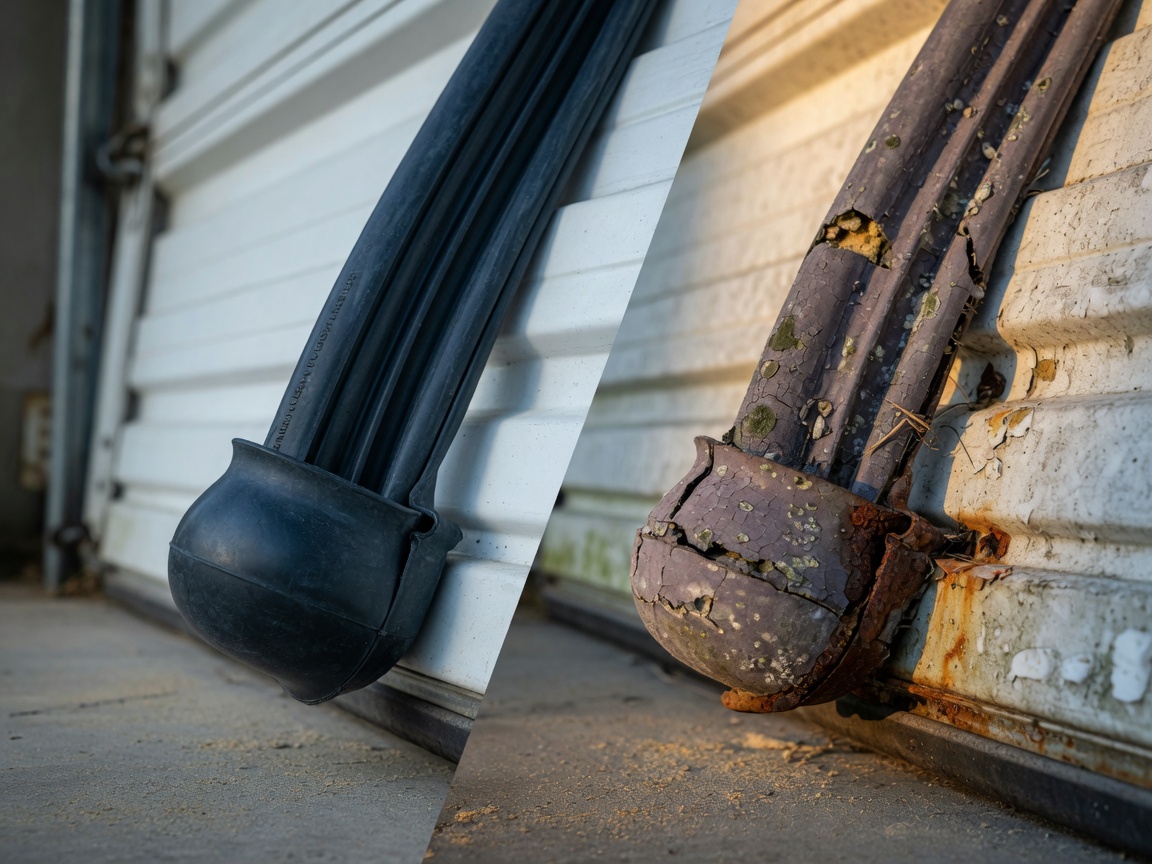
Whether you’re dealing with a noisy opener, a door that won’t close properly, or visible rust eating away at your panels, understanding the root causes tied to our subtropical environment will save you time, money, and frustration.
How Salt Air and Humidity Accelerate Wear
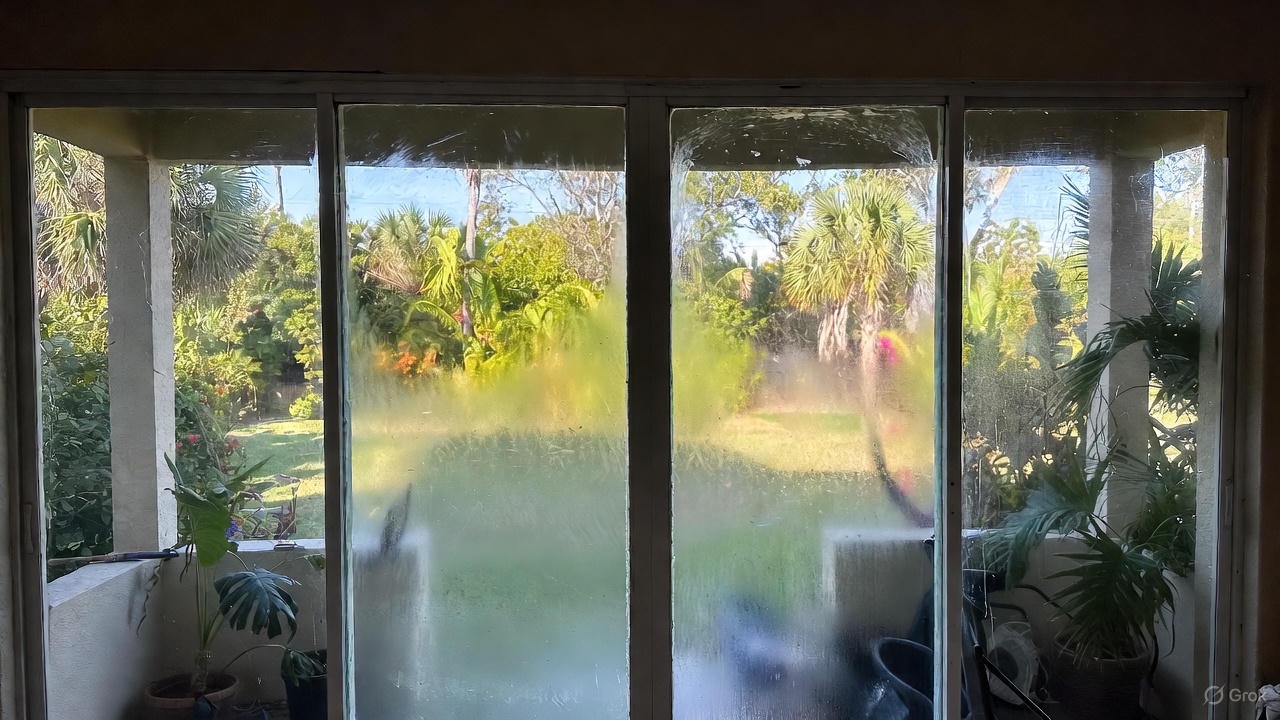
Southwest Florida’s coastal environment is brutal on garage doors. Salt air acts like a constant corrosive mist, while humidity levels that often exceed 80% encourage oxidation, mold, and material fatigue. These conditions cause failures much faster than in inland or northern climates.
The Science Behind SWFL Garage Door Damage
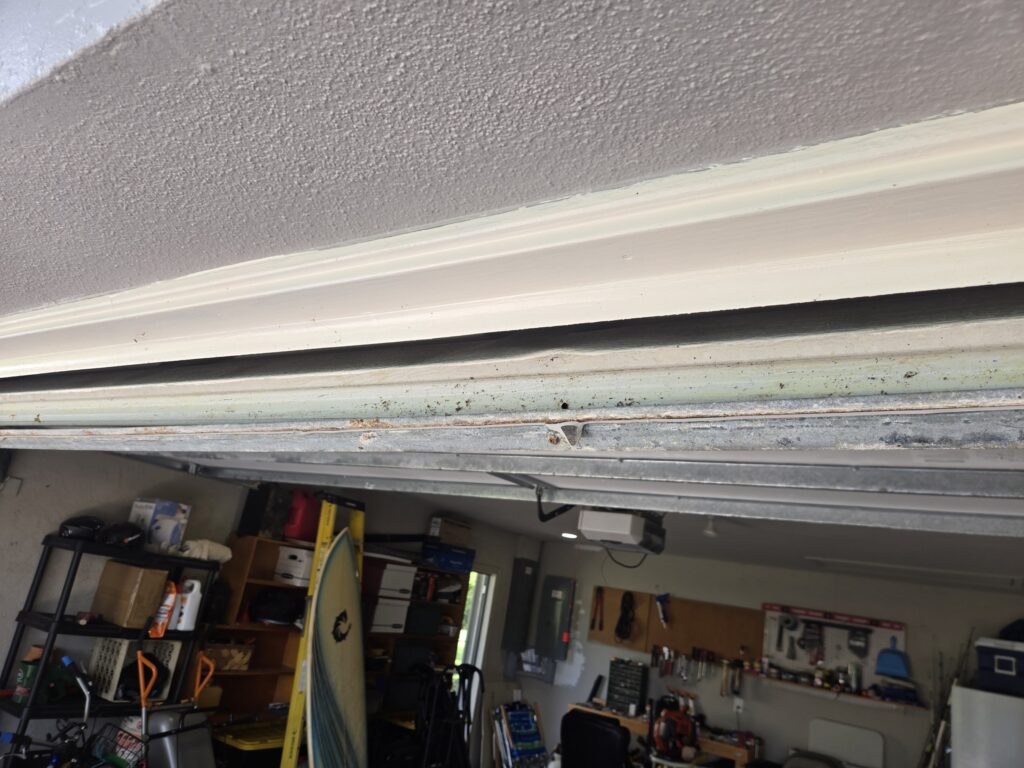
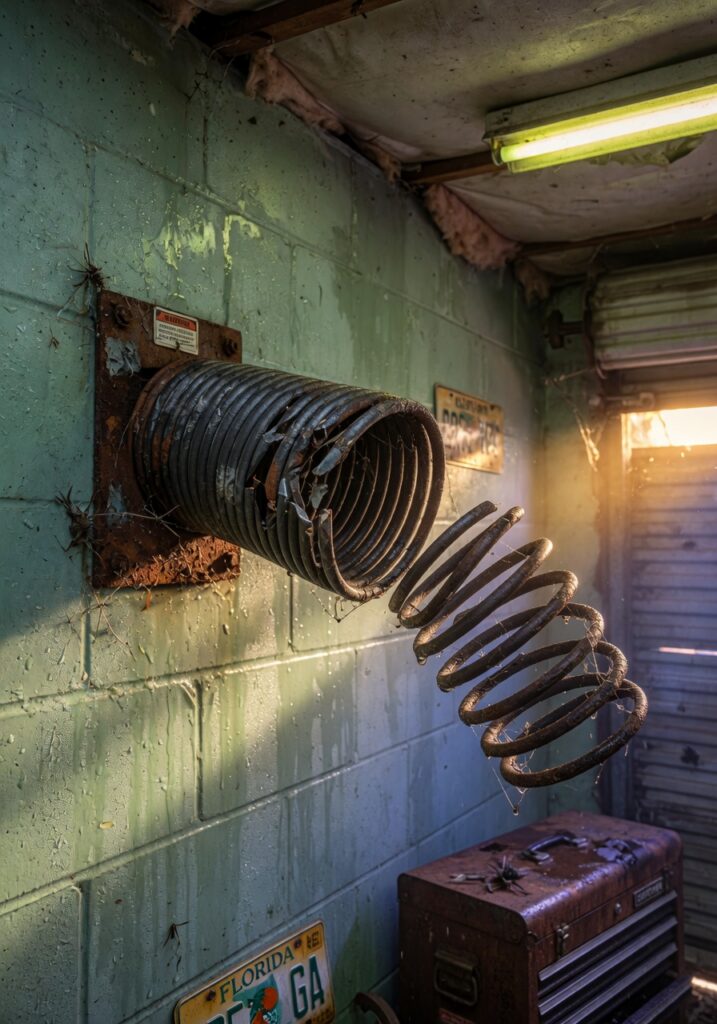
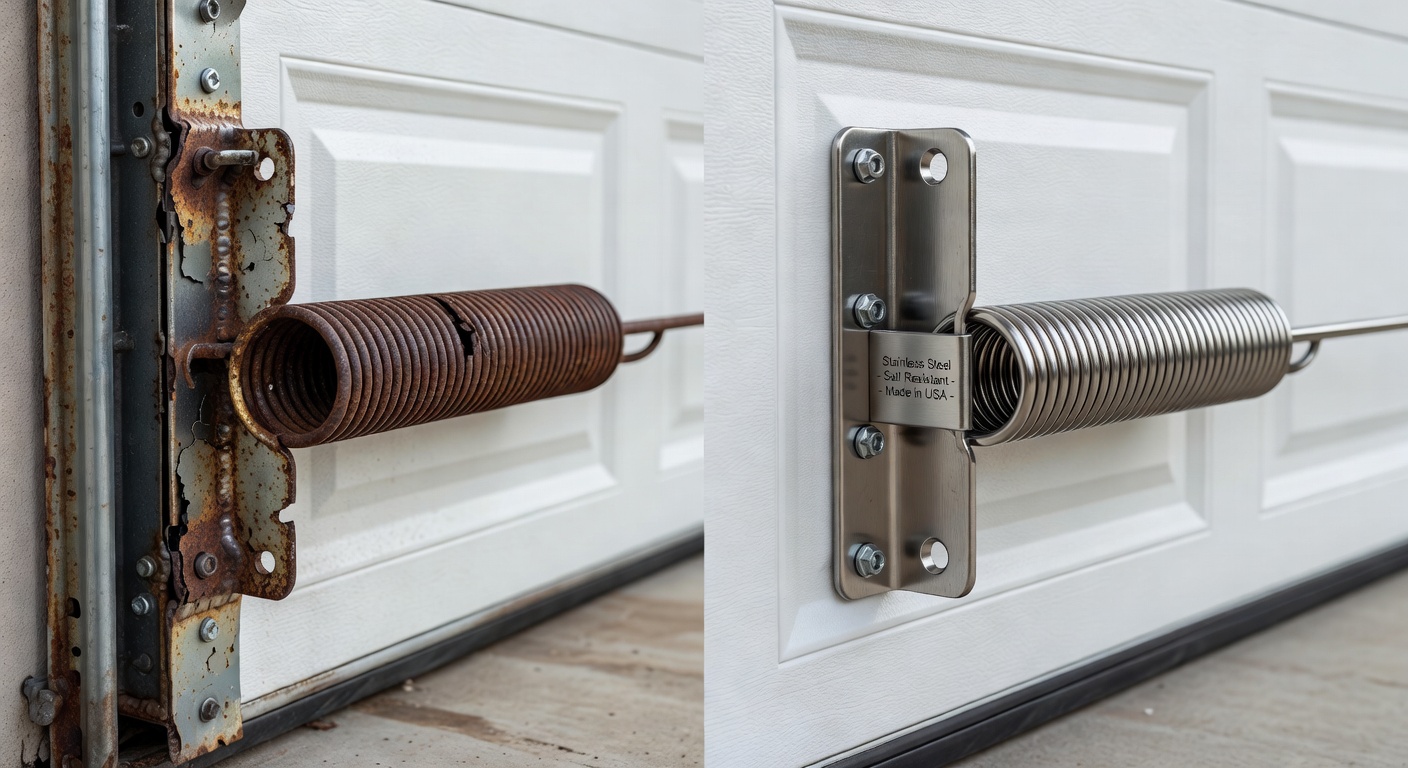
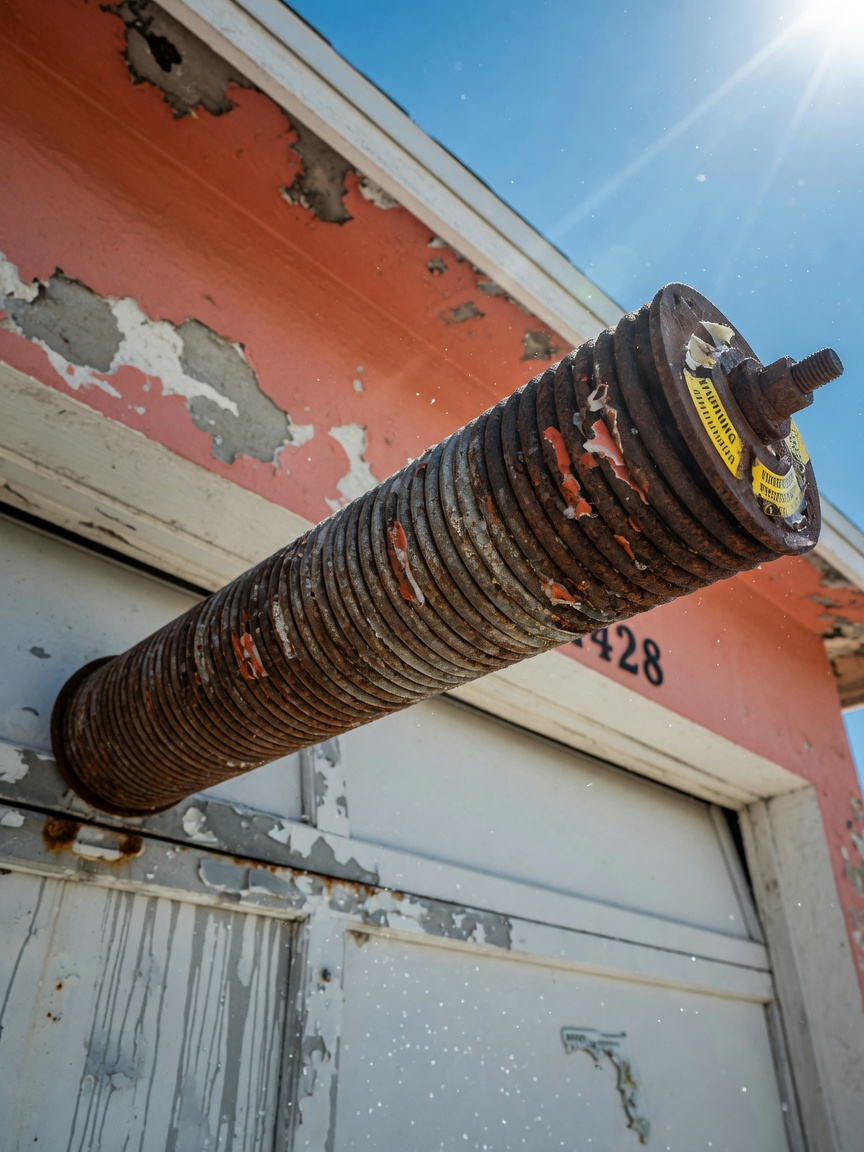
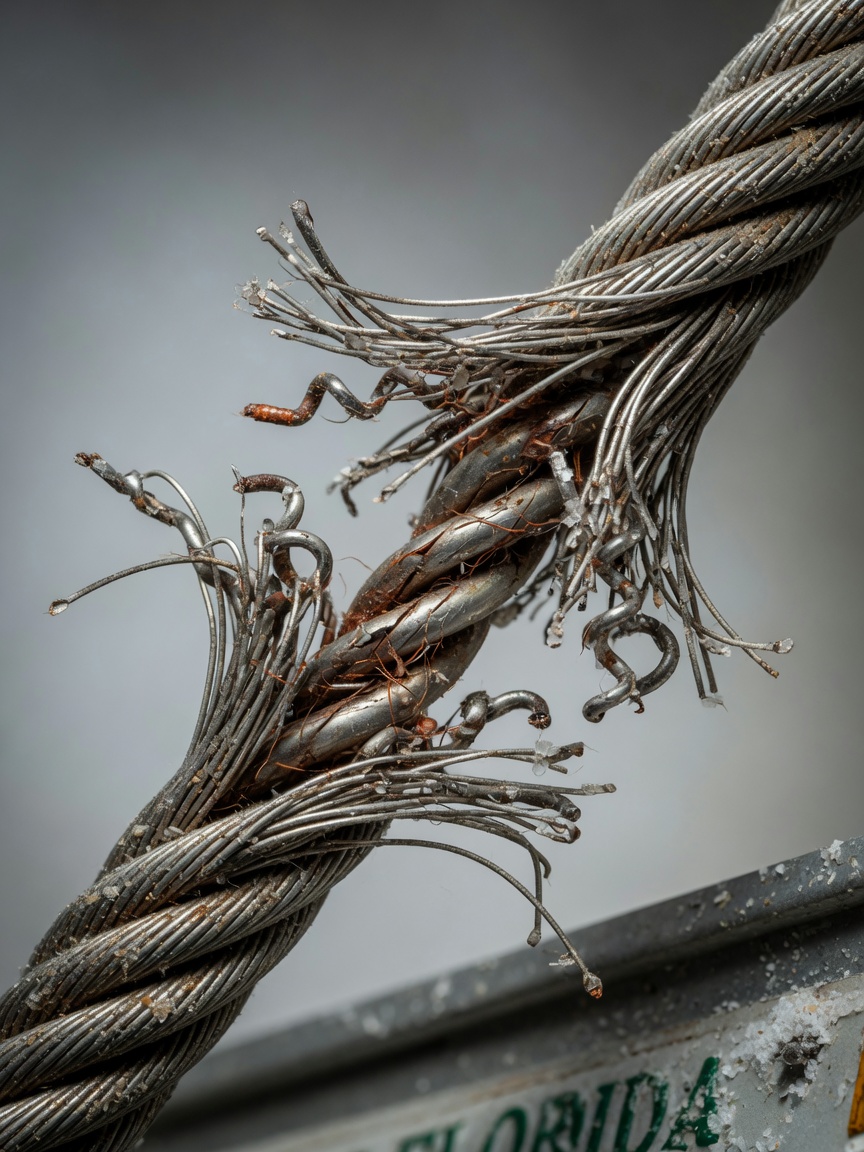
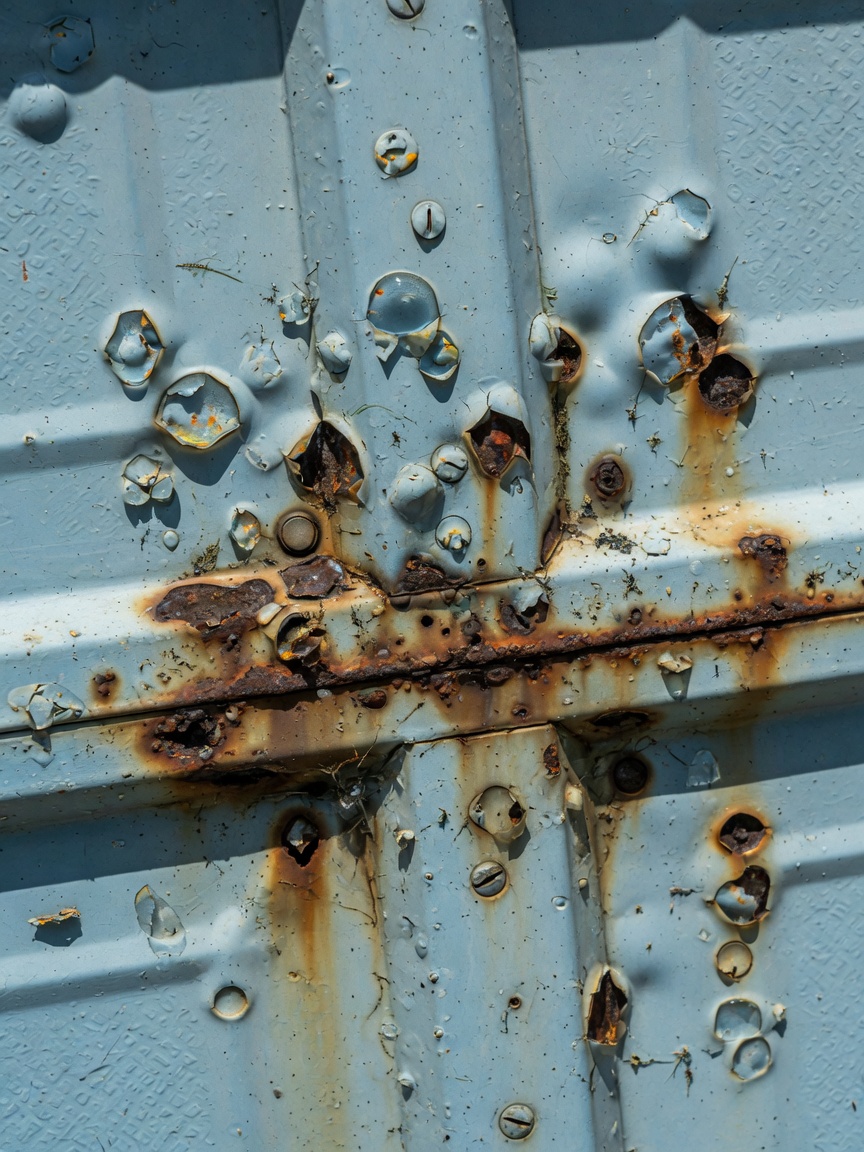
Salt particles in the air settle on metal components and, combined with moisture, create an electrolytic reaction that eats away at steel, springs, cables, and hinges. This process, known as galvanic corrosion, is especially aggressive within five miles of the coastline—precisely where many Cape Coral garage door issues originate.
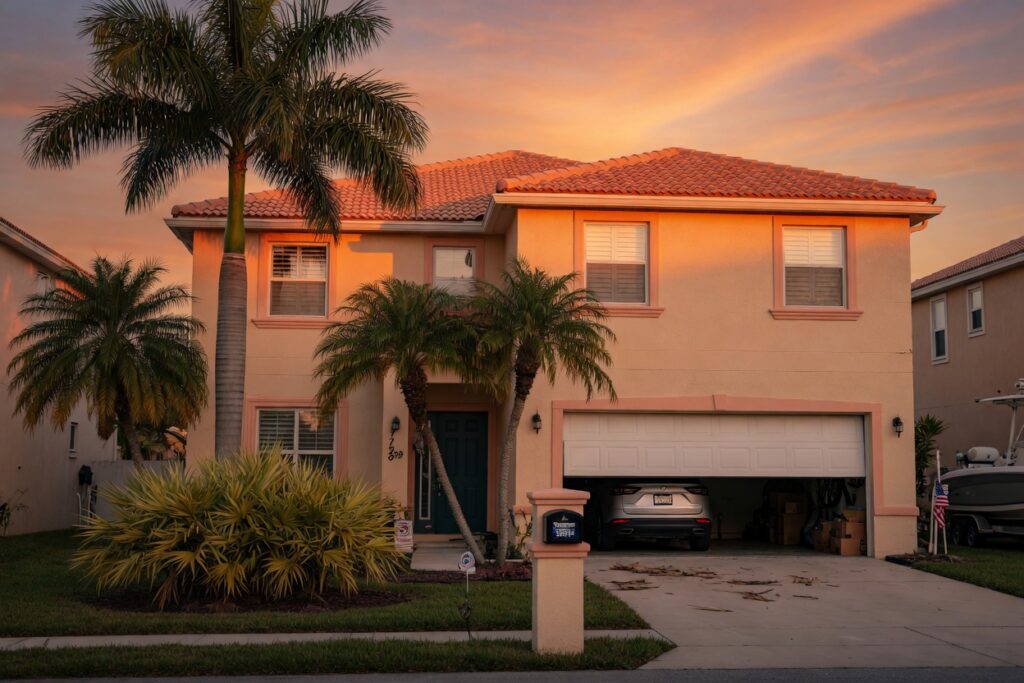
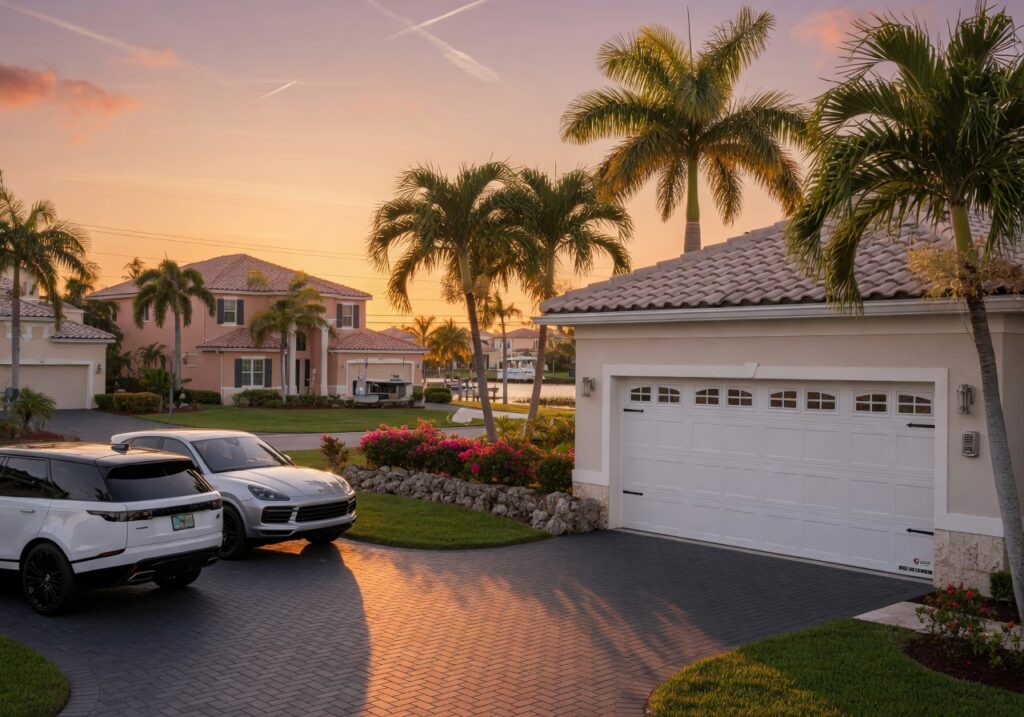
Image Grid 2
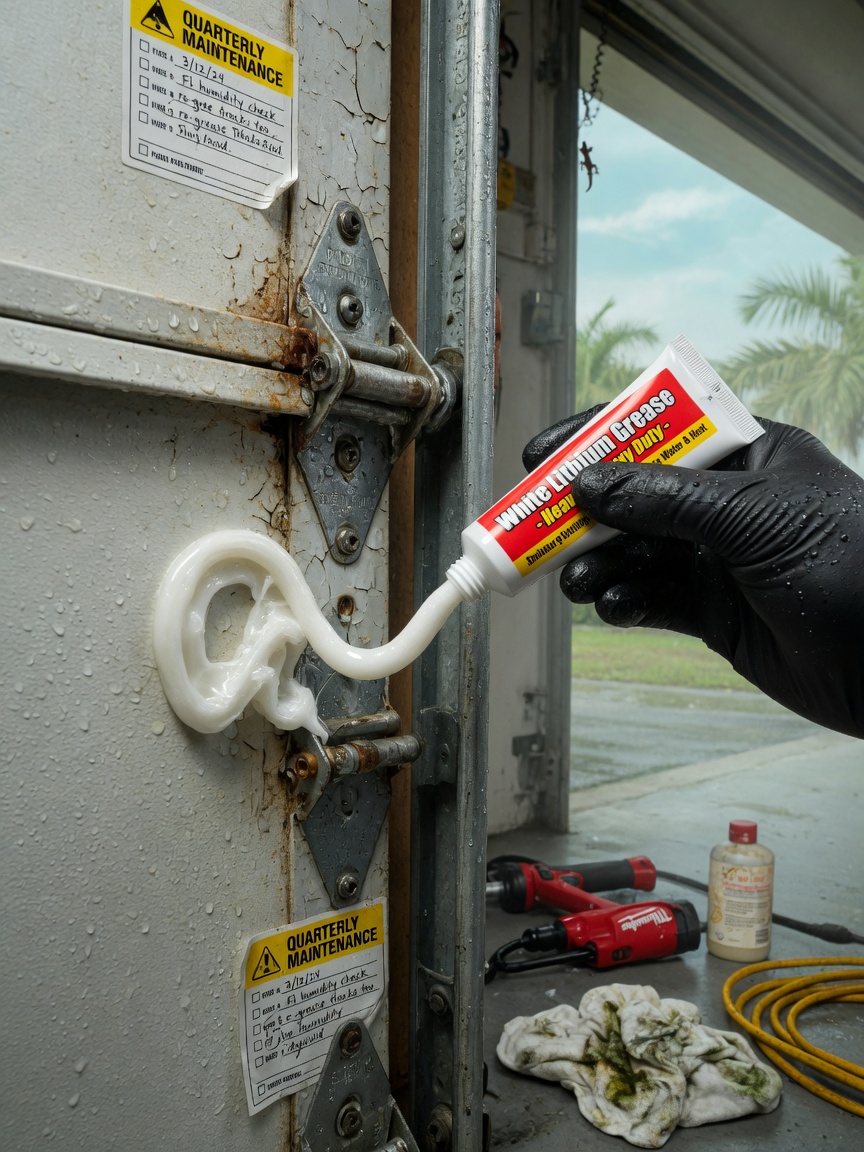
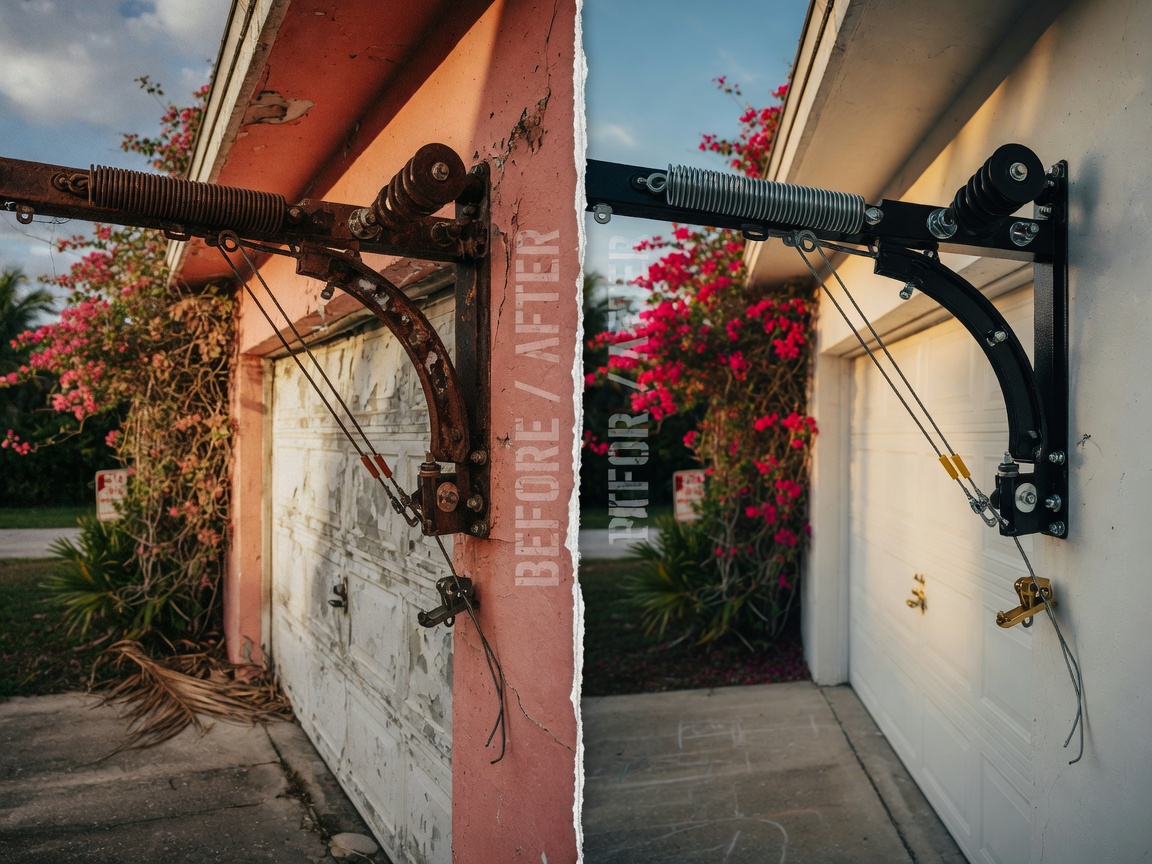
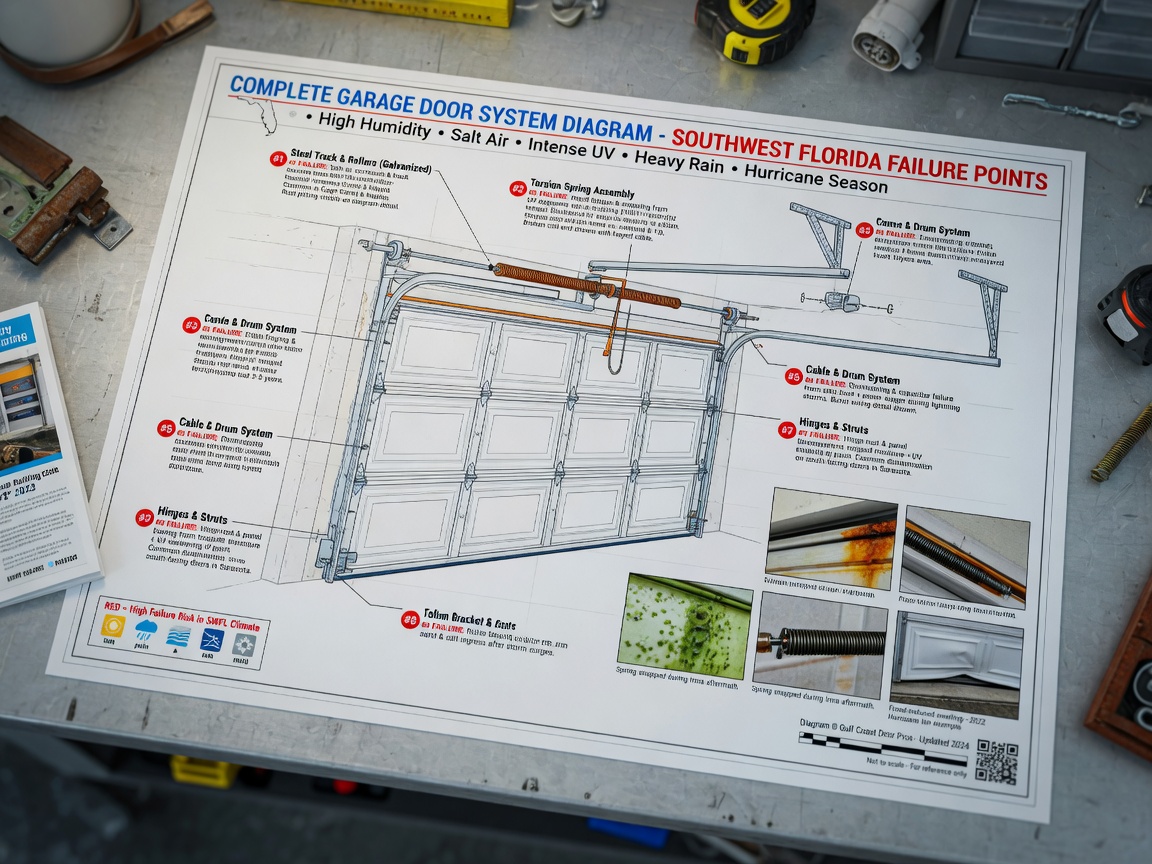
High humidity also causes torsion springs to lose lubrication faster, leading to premature fatigue and snapping. Rubber weather seals degrade quickly in intense UV light and constant moisture, allowing water intrusion that warps panels and damages tracks.
Most Common Climate-Driven Failures
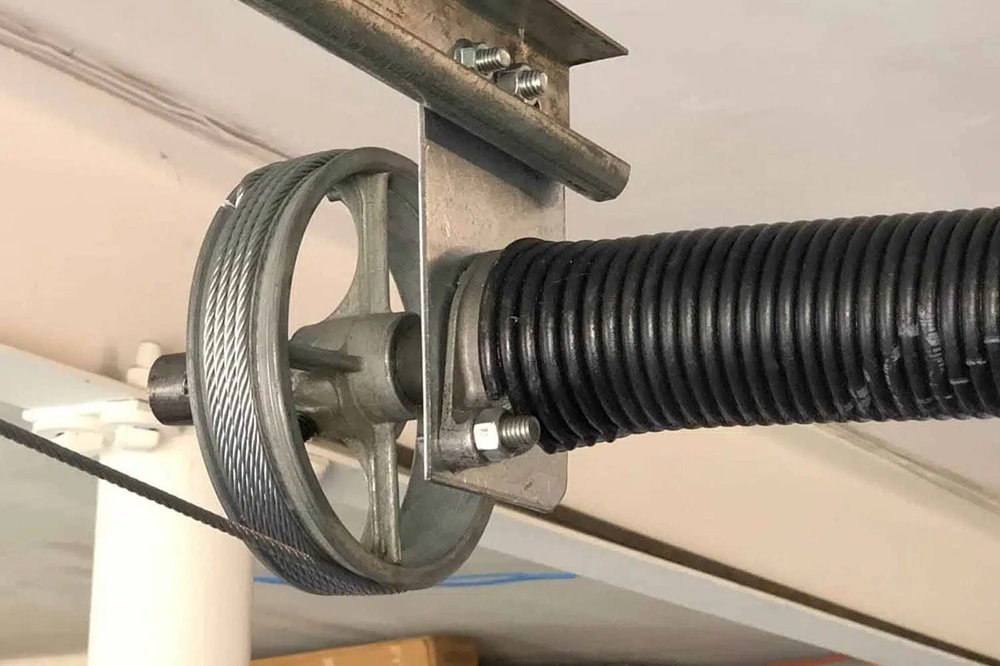
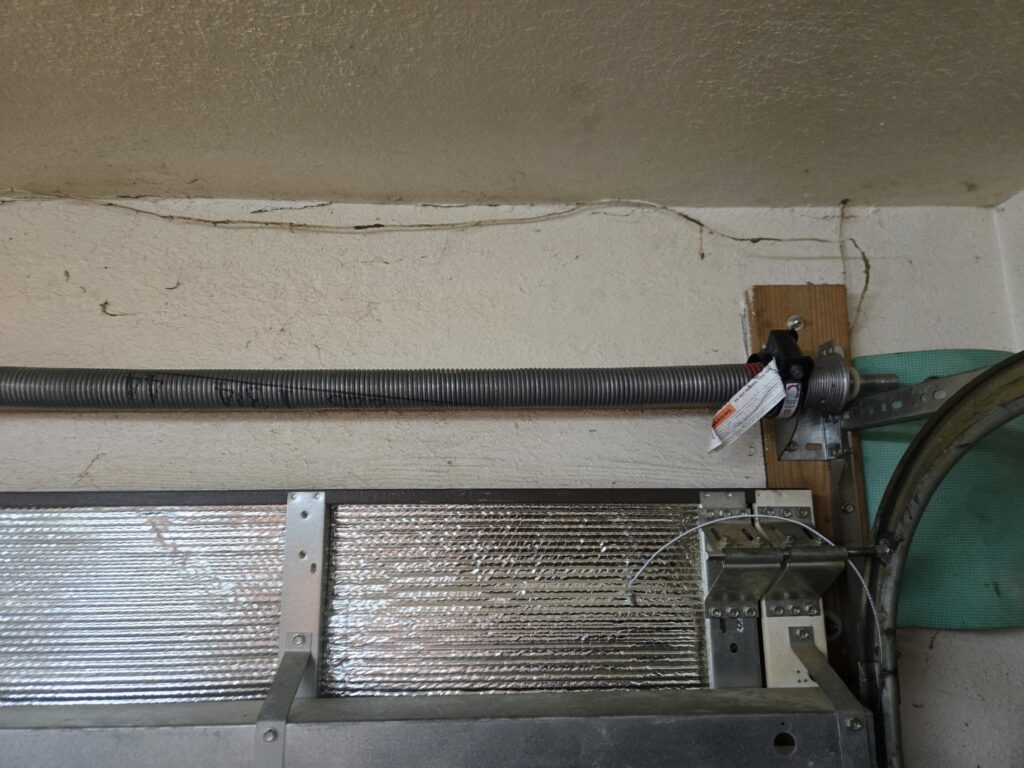
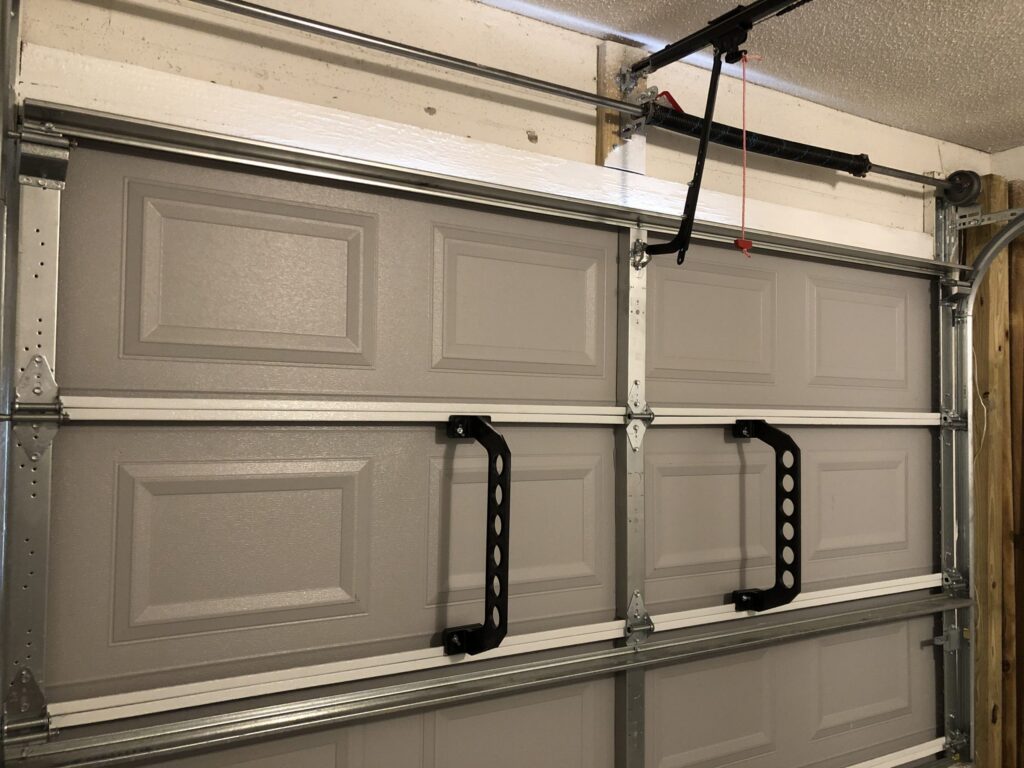
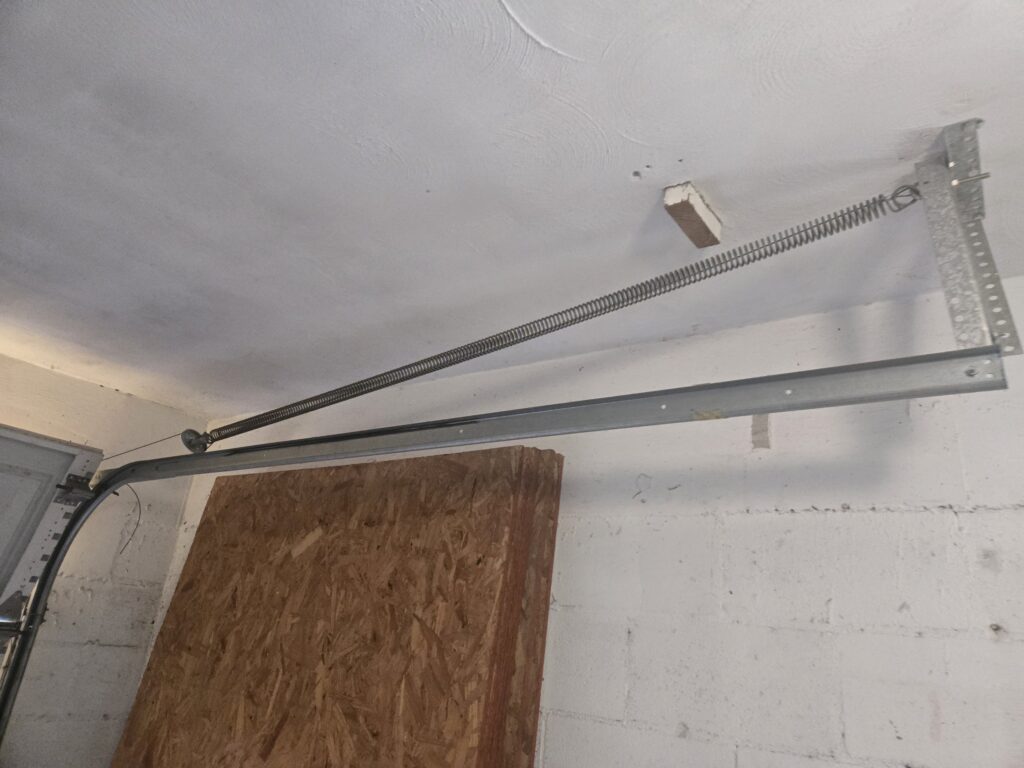
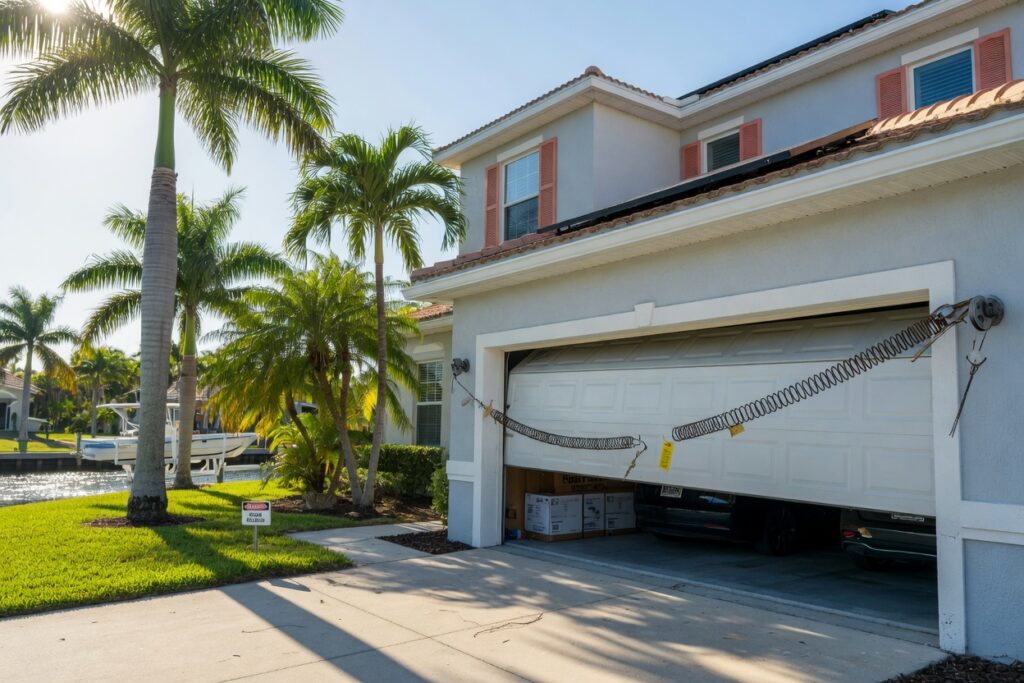
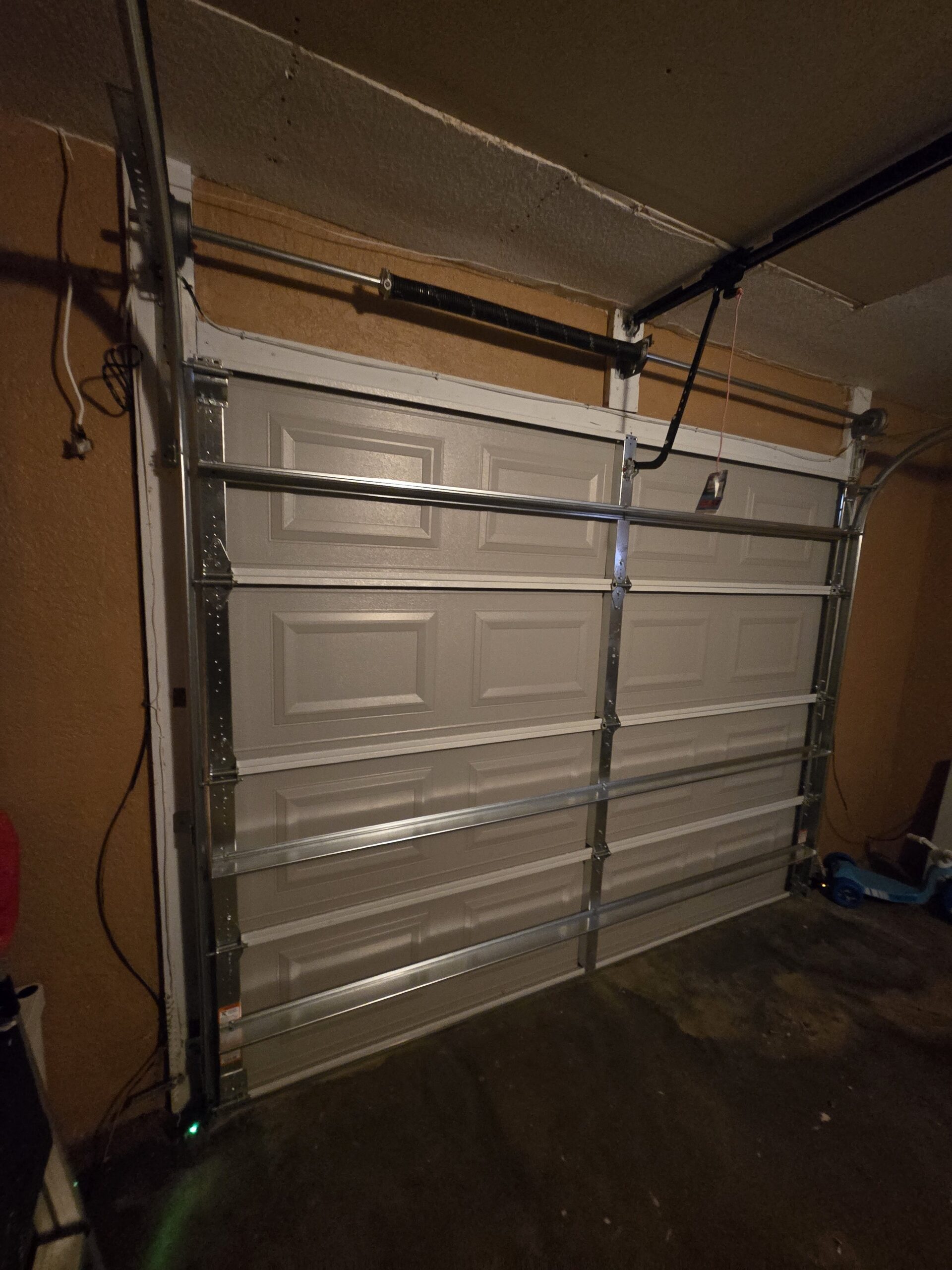
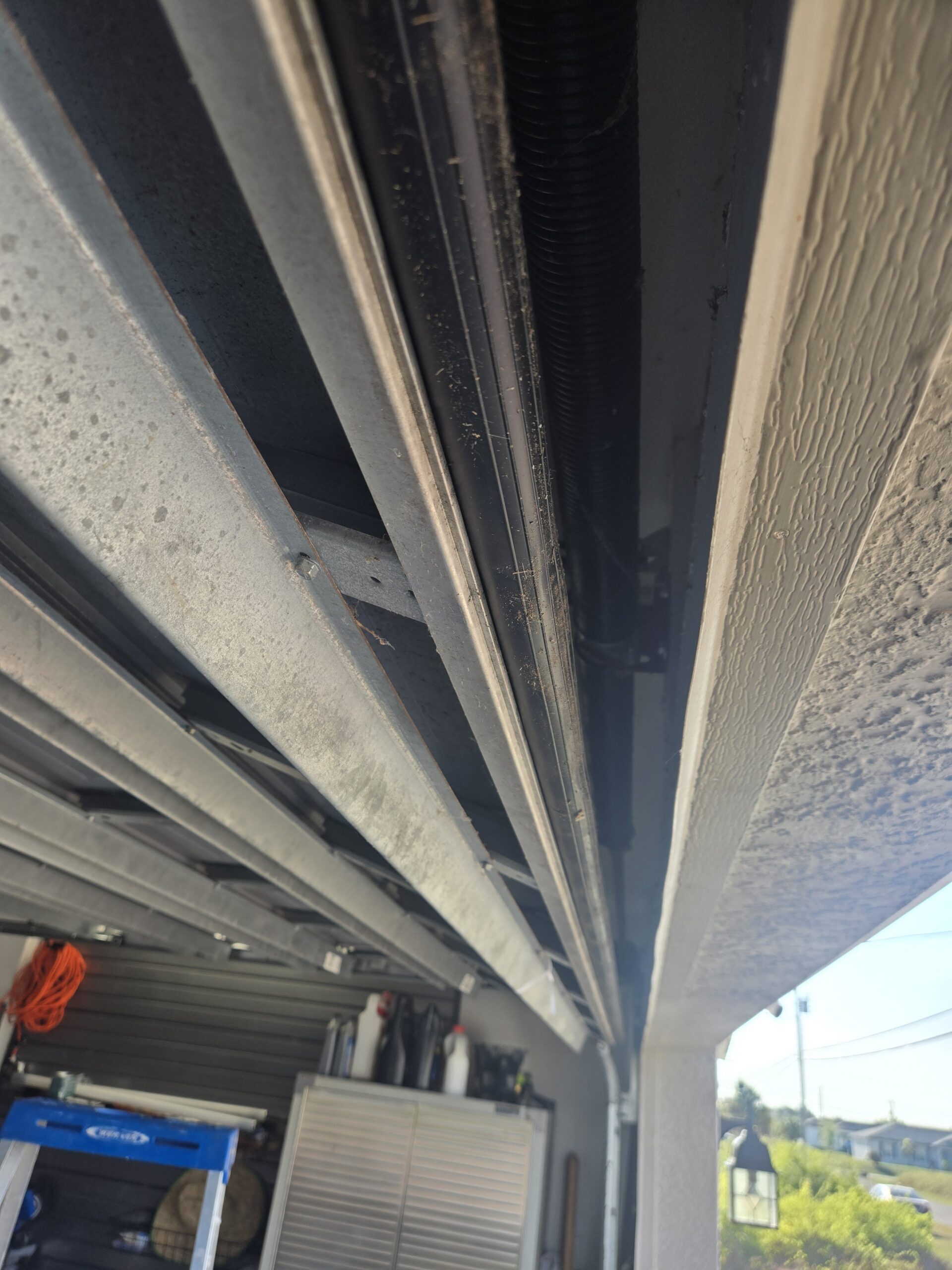
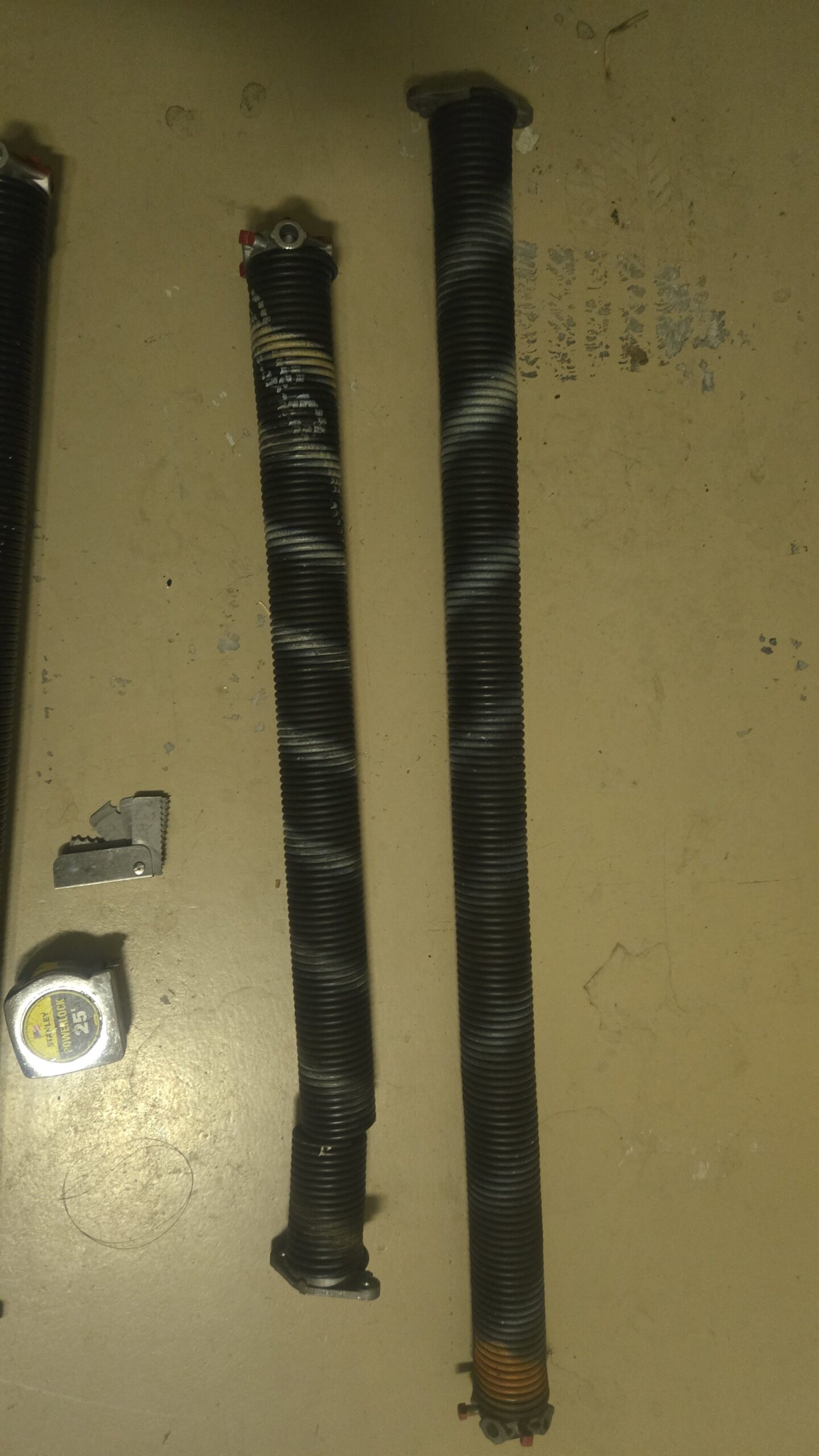
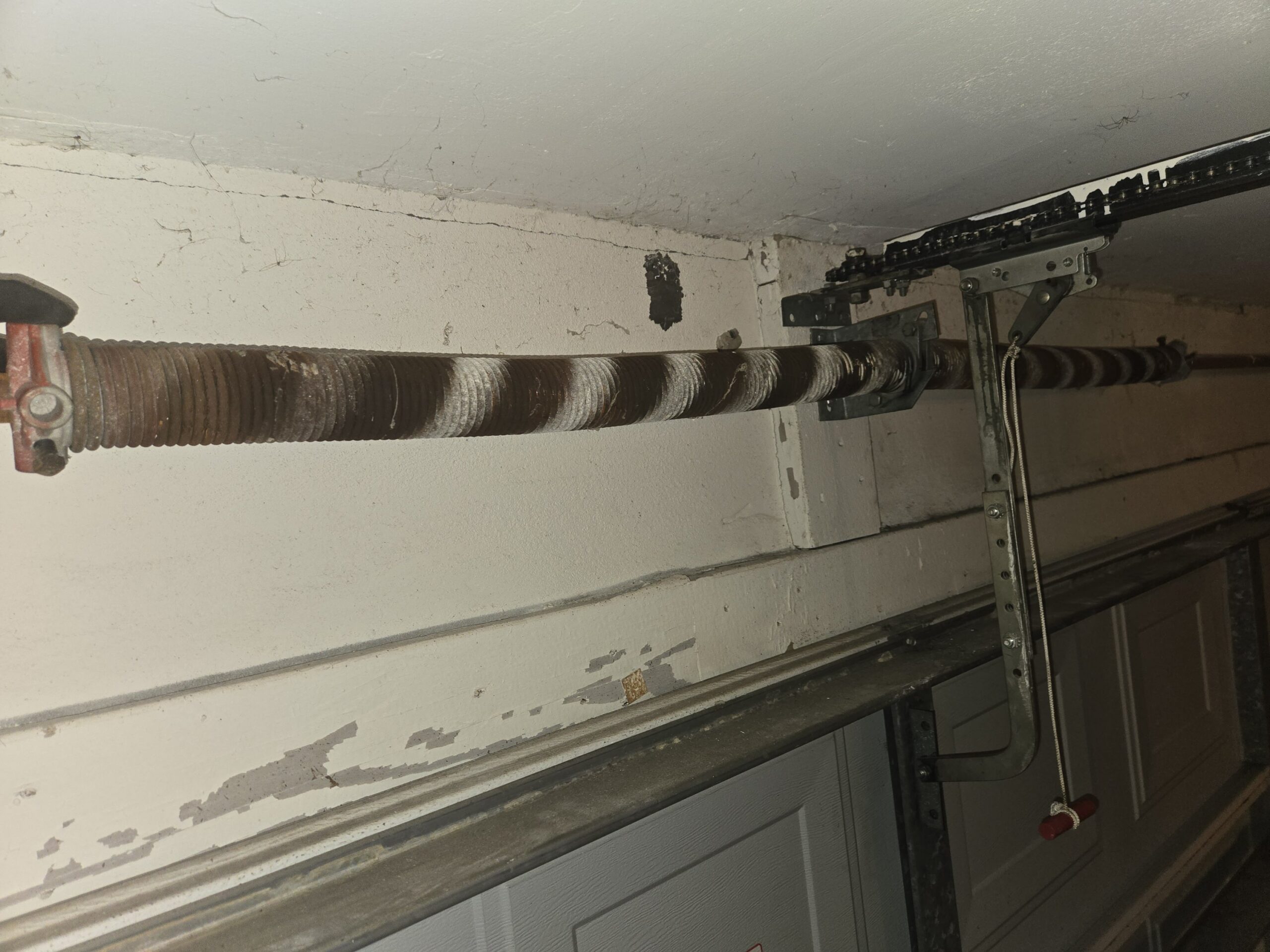
- Corroded Springs and Cables: Salt air breaks down the protective coating on extension and torsion springs, causing them to rust from the inside out. A spring that should last 10,000 cycles may fail in half that time in SWFL.
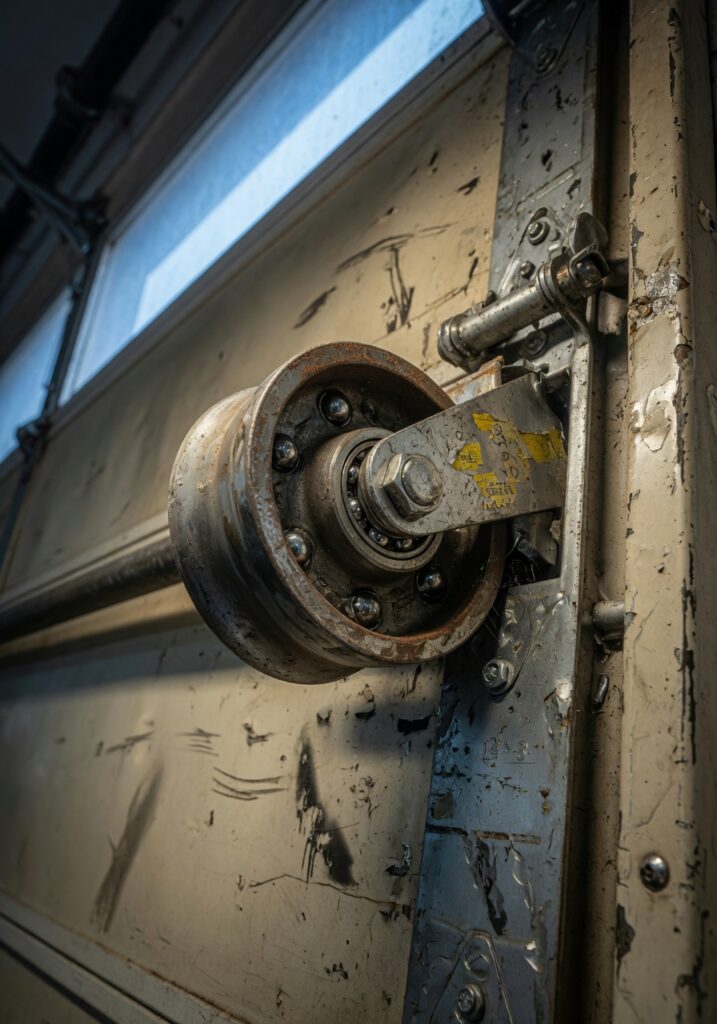
- Seized Rollers and Hinges: Humidity and salt cause metal rollers to bind and plastic or nylon rollers to swell, creating grinding noises and uneven door movement.
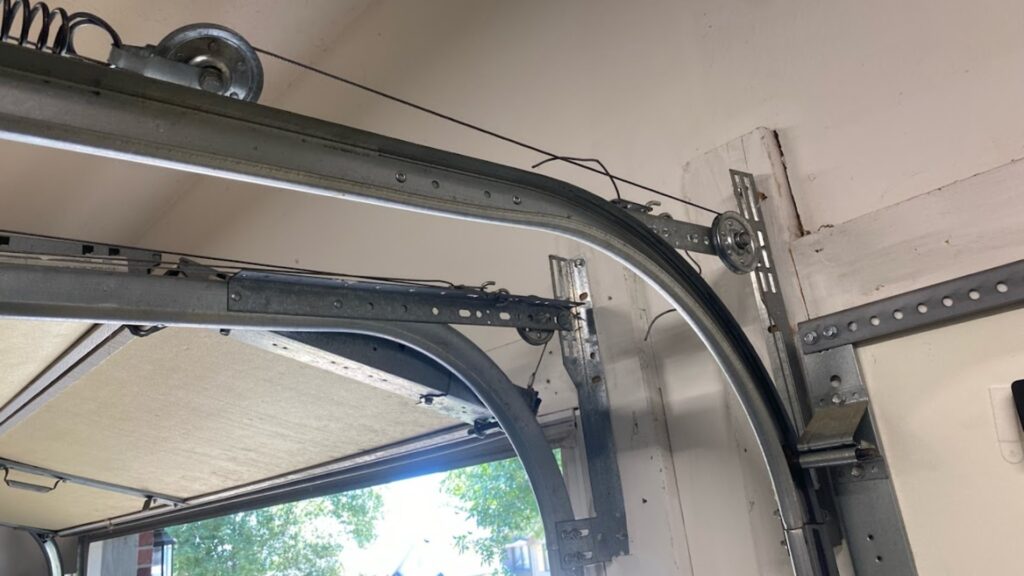
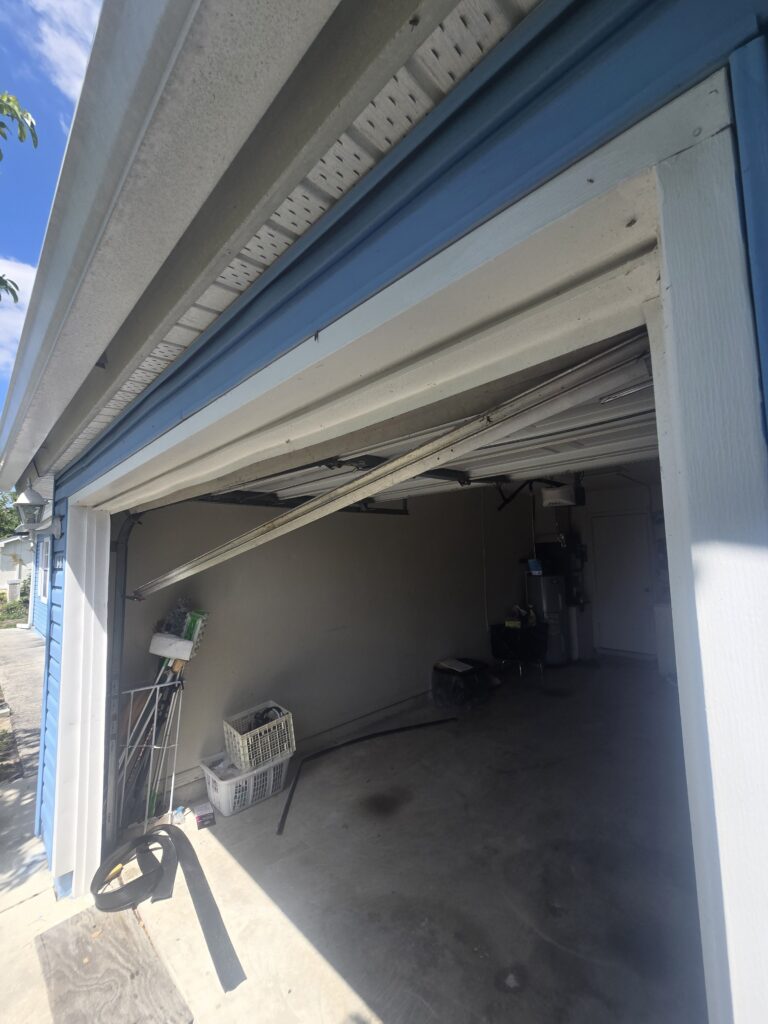
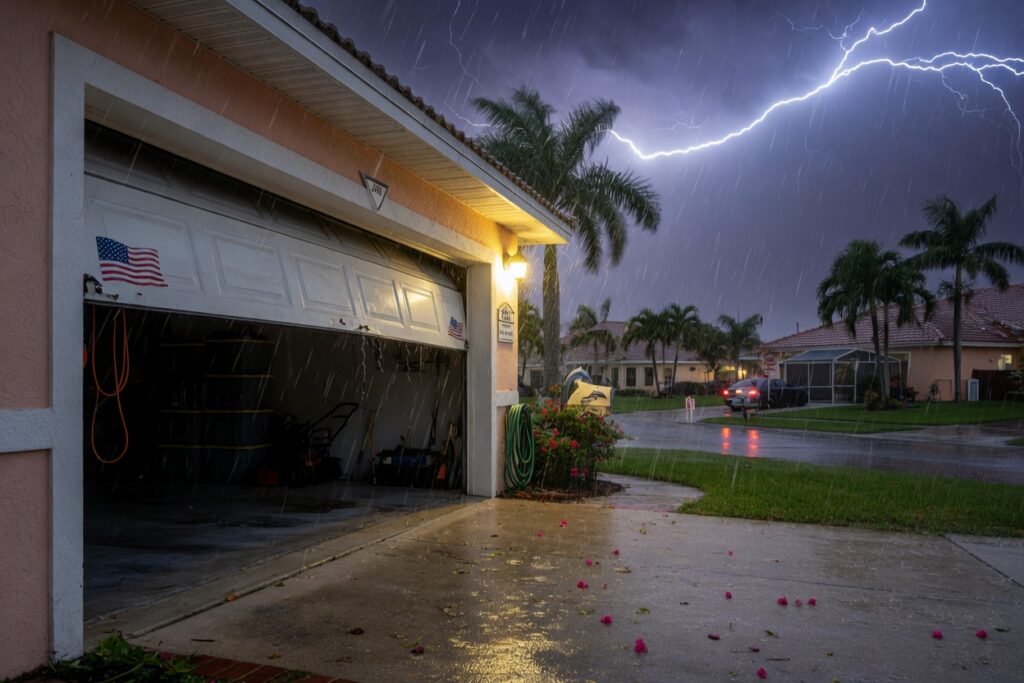
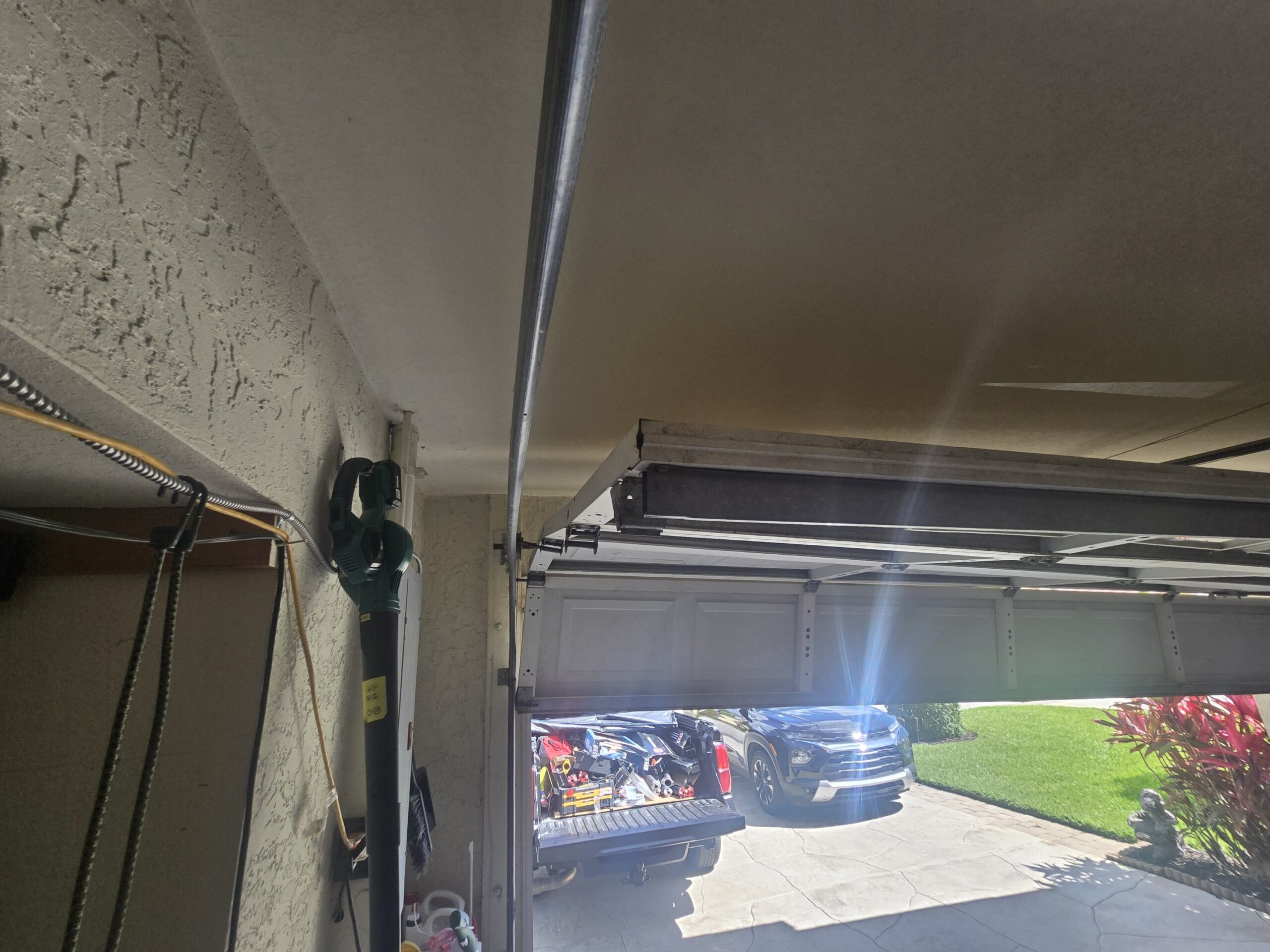
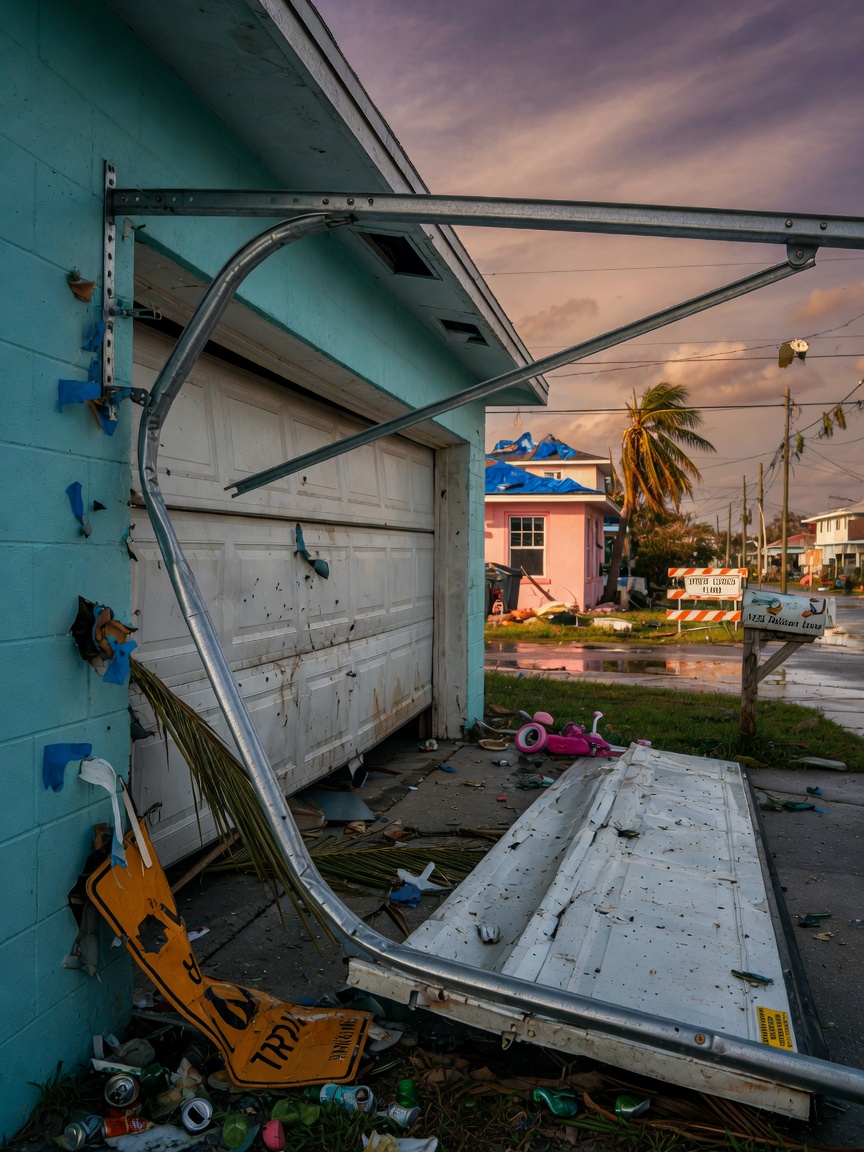
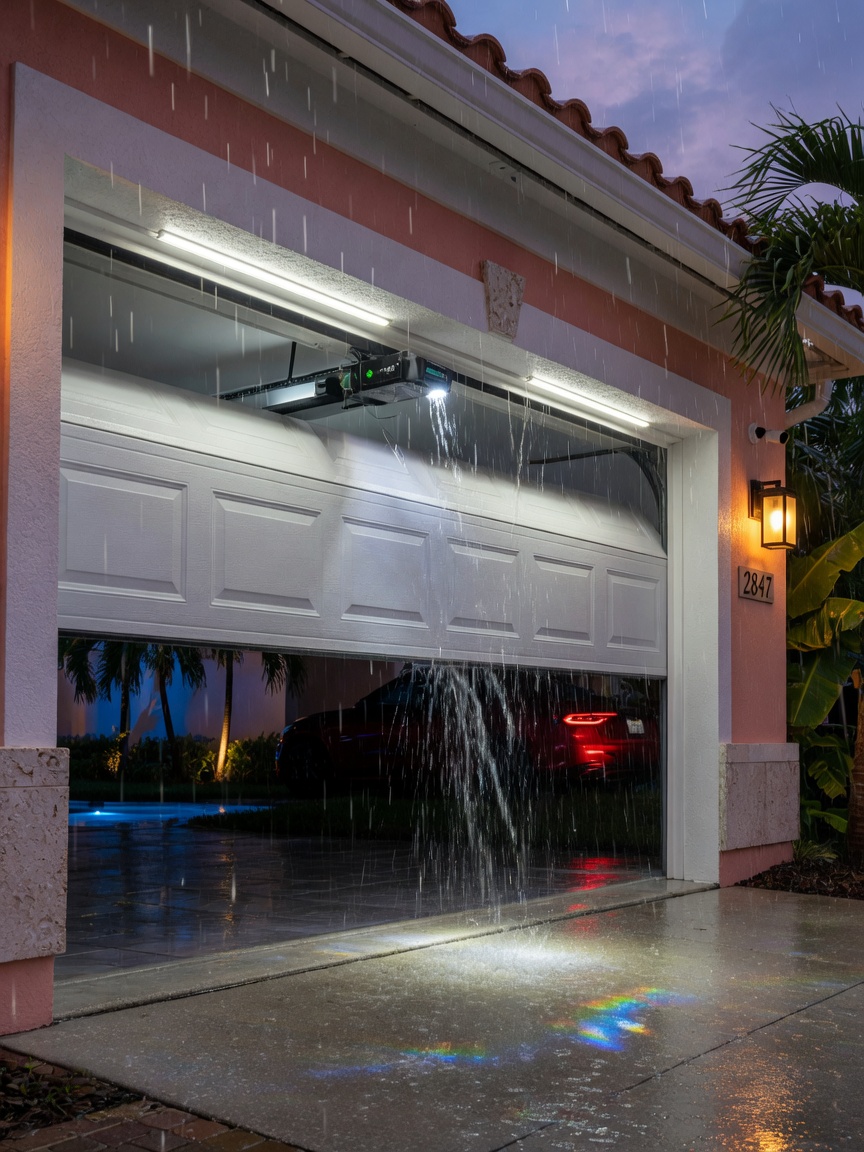
- Track Misalignment from Storm Impact: Even minor tropical storms can shift tracks or dent panels, leading to binding and safety sensor failures.
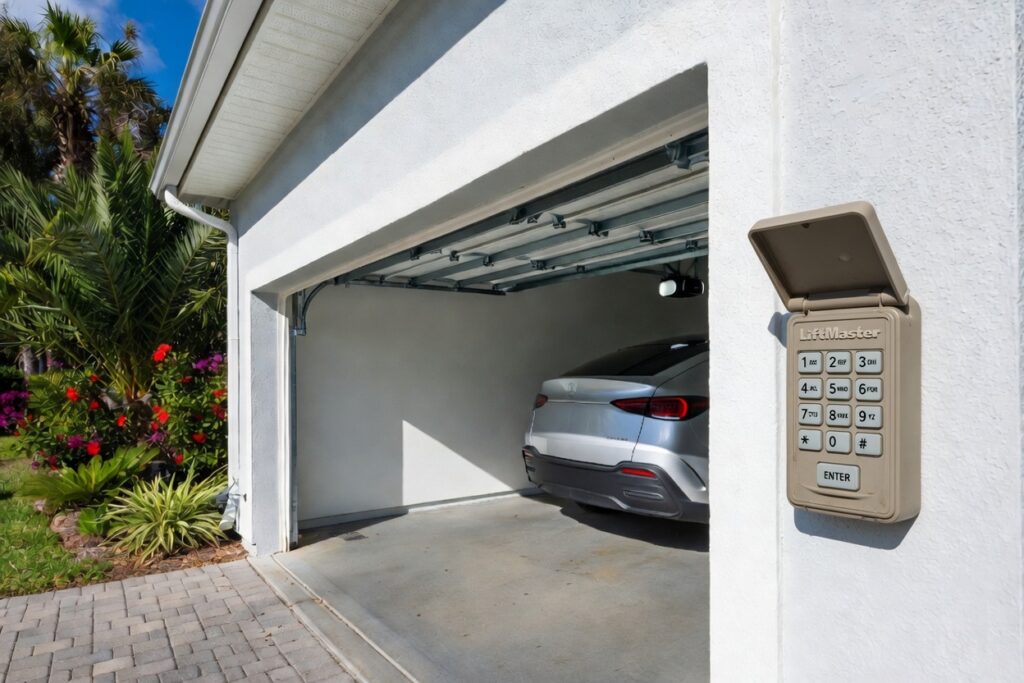
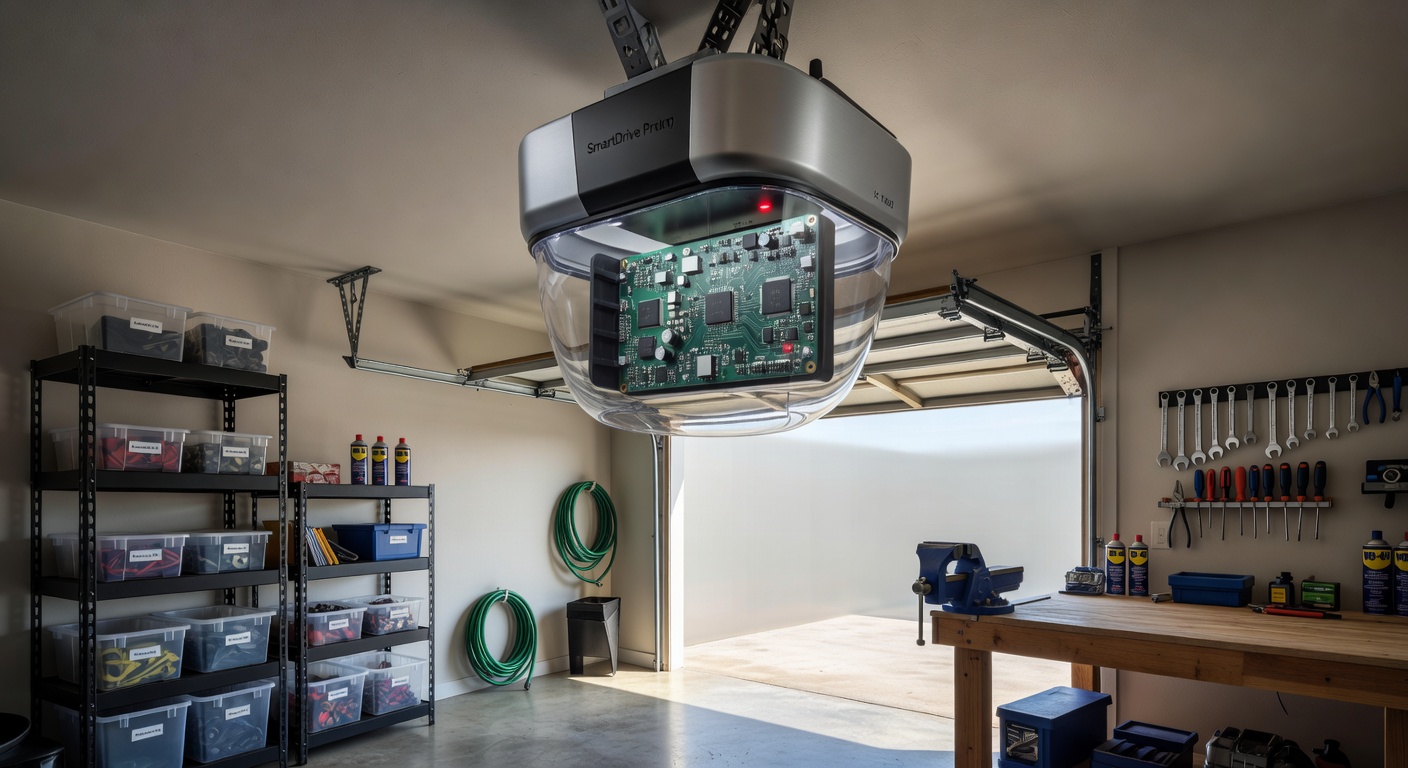
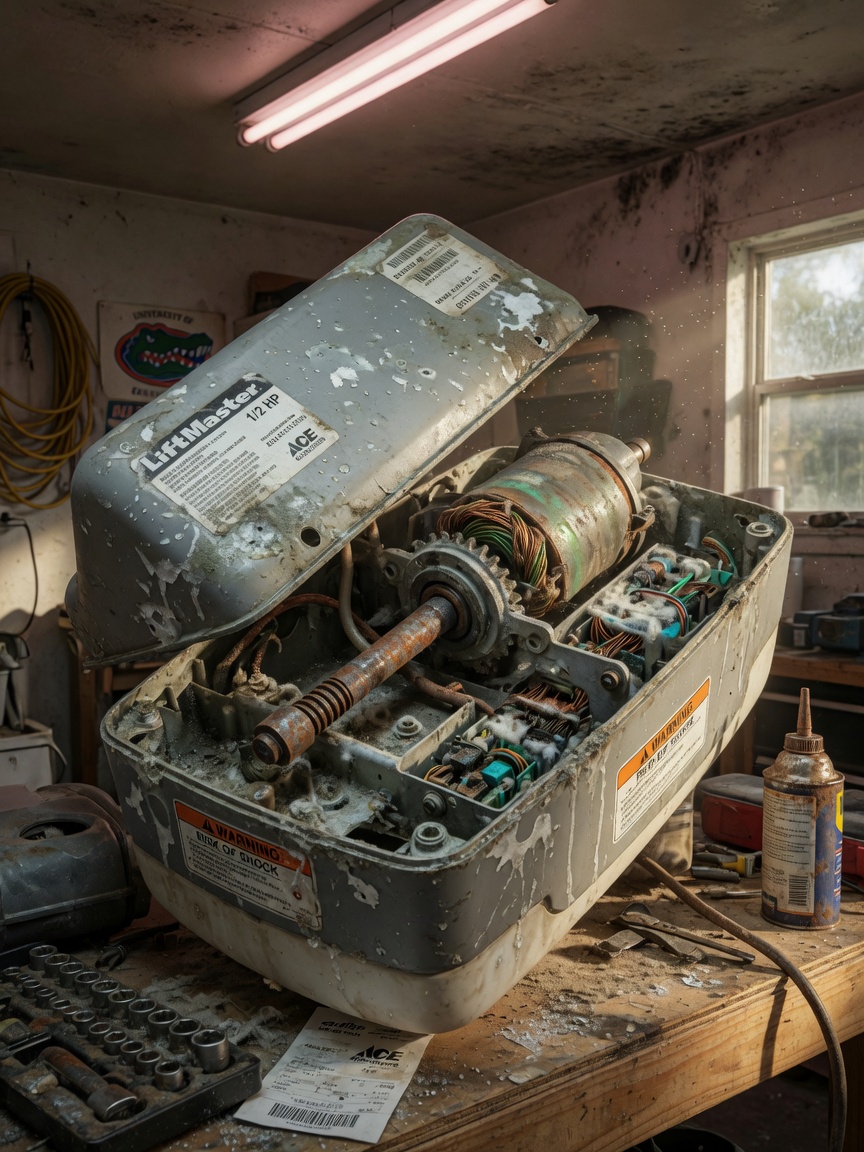
- Opener Overheating and Failure: Constant high humidity causes electrical components in garage door openers to corrode, leading to intermittent operation or complete failure.
- Panel Delamination and Rust: Pressed steel doors common in Florida developments blister and rust from the bottom up when moisture gets trapped between layers.
Diagnostic Checklist for Homeowners
Before calling a technician for swfl garage door repair, run through this climate-specific diagnostic checklist. These safe checks can help you identify whether your issue stems from normal wear, storm damage, or urgent safety problems.
Visual Inspection (Do This Monthly)
Start with the basics. Look for:
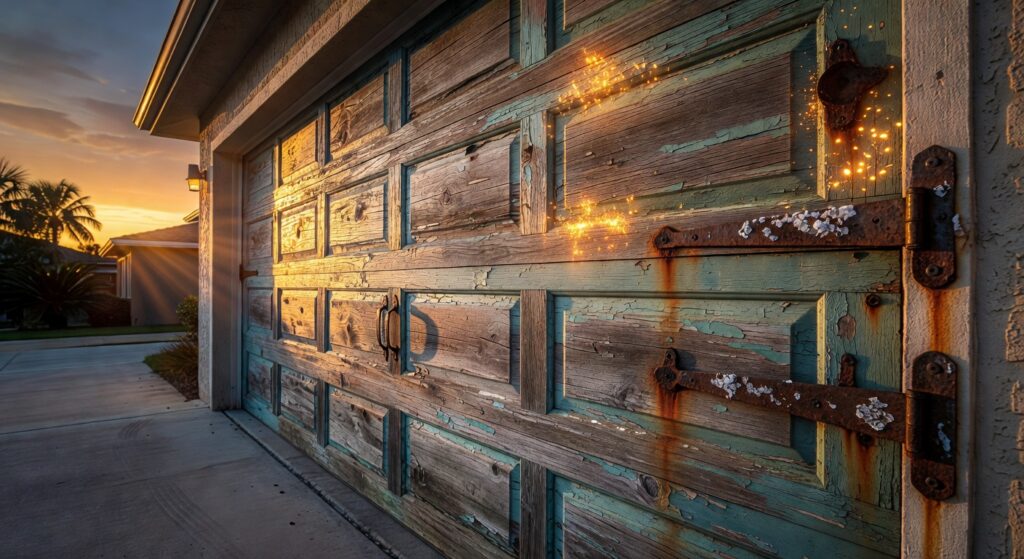
- Visible rust or white powder on springs, cables, and bottom brackets
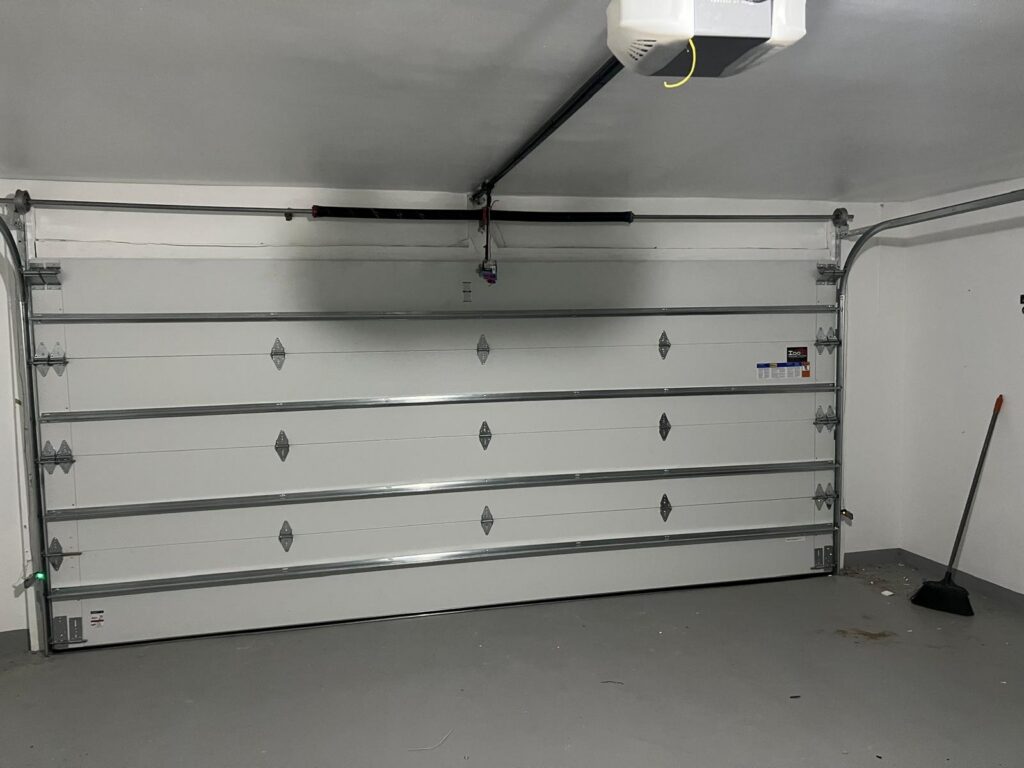
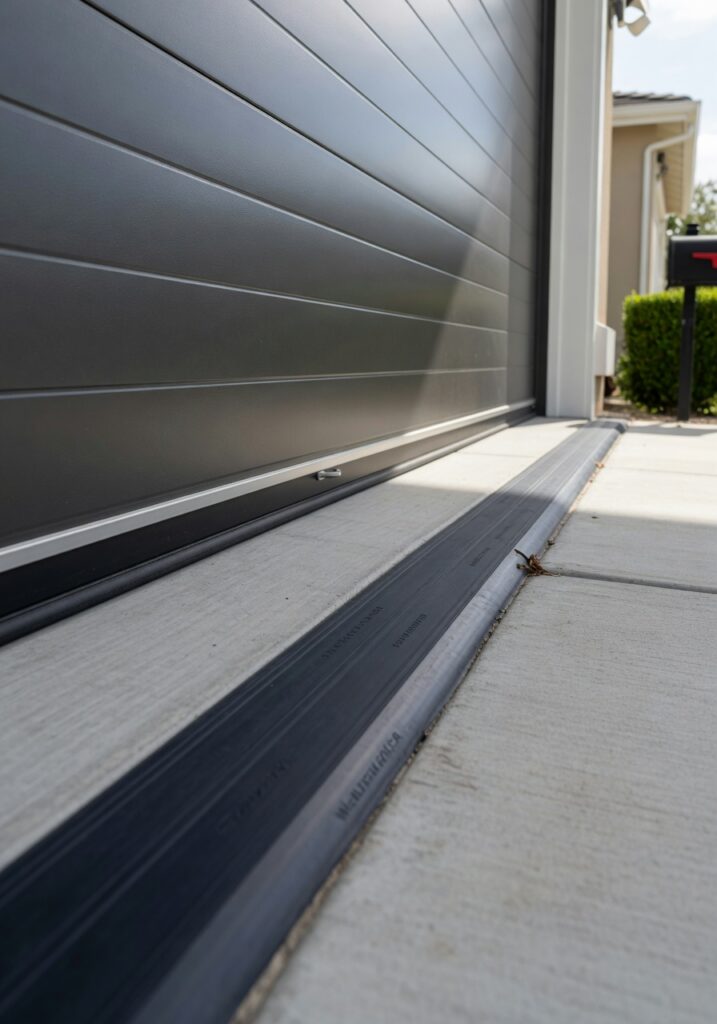
- Gaps between the door and floor when closed (compromised weather seal)
- Uneven gaps along the sides or top of the door
- Cracked, brittle, or missing rubber seals
- Bent or dented panels from hail or debris
- Excessive grease or rust dust on the floor beneath the springs
Operational Red Flags
Listen and observe carefully when operating your door:
- Grinding, screeching, or banging sounds (often indicates failed rollers or dry bearings)
- Door reverses before touching the ground (failing safety sensors or misaligned tracks)
- Door stops halfway or moves very slowly
- Opener struggles or makes a clicking sound without moving the door
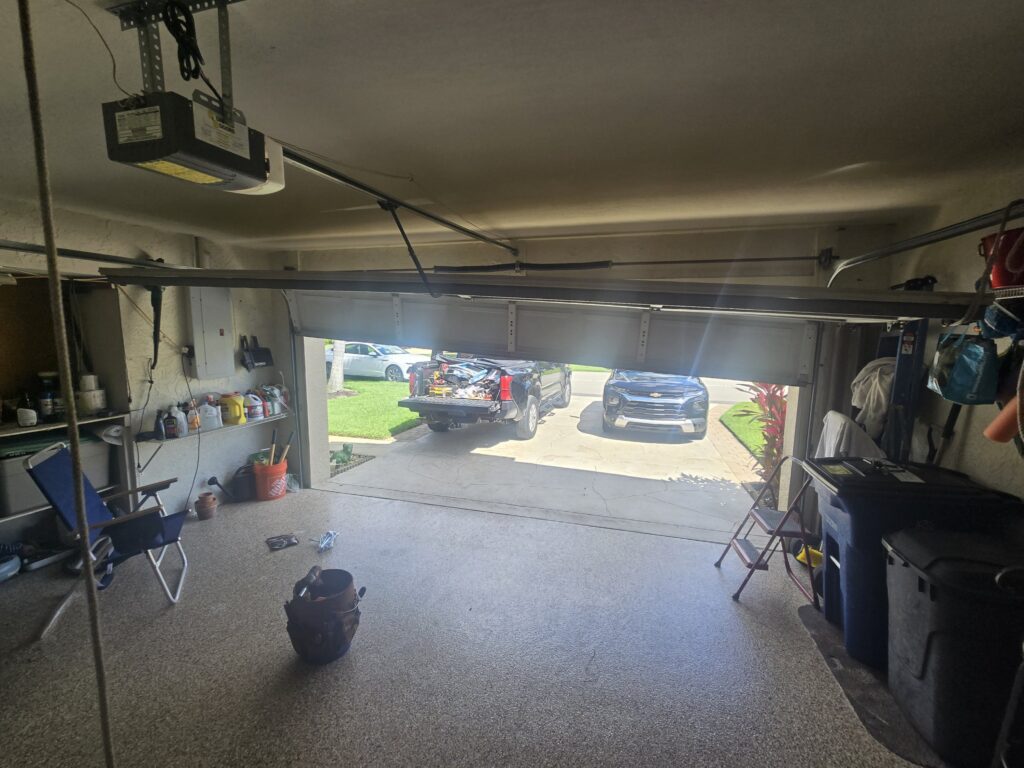
- Door appears crooked or sags on one side
Florida Humidity Door Failures Specific Tests
Perform these three simple tests safely:
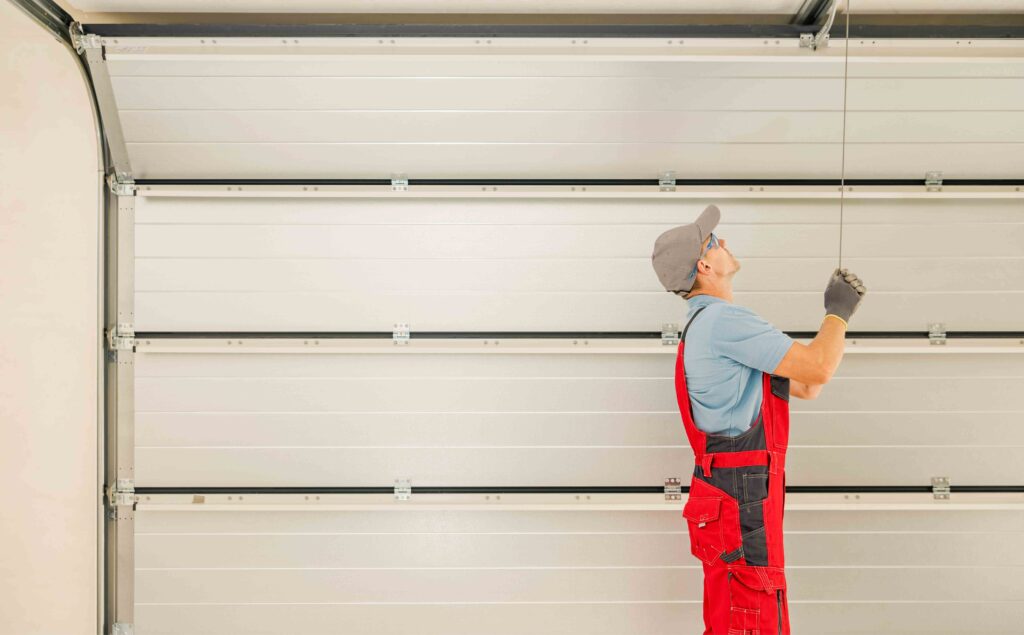
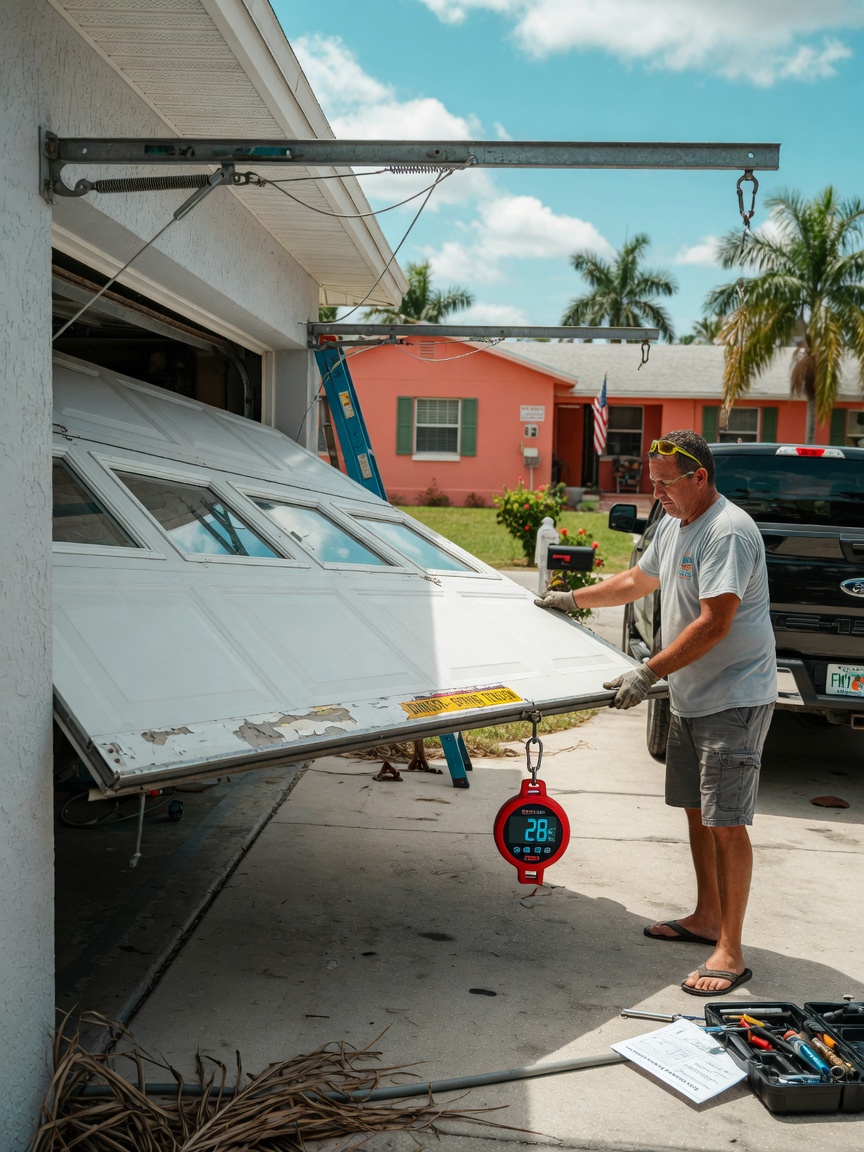
- The Balance Test: Disconnect the opener (pull the red emergency release cord) and manually lift the door halfway. It should stay in place. If it crashes down or shoots upward, your springs are badly fatigued—a common issue in SWFL’s heat and humidity.
- Roller Check: With the door closed, visually inspect the bottom rollers. If they look rusty or don’t spin freely when you wiggle them, they need replacement.
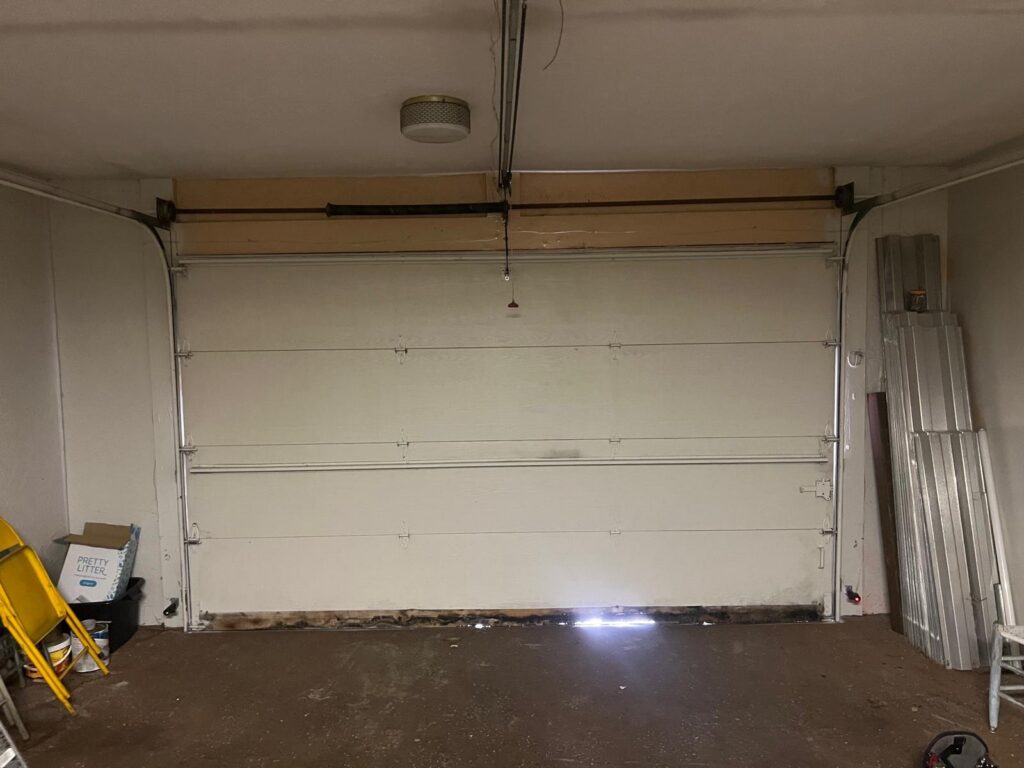
- Seal Integrity Test: Close the door and look for daylight coming through the bottom or sides. Significant light means your seals have failed, allowing humid air and salt into your garage and home.
Safe Temporary Fixes vs Permanent Solutions
Some garage door problems southwest florida homeowners experience can be temporarily managed, but most require professional attention due to the extreme forces involved. Here’s how to tell the difference.
Safe DIY Maintenance for SWFL Conditions
These tasks are homeowner-friendly and recommended quarterly in our climate:
- Cleaning tracks with a damp cloth and mild detergent (never use harsh chemicals that accelerate corrosion)
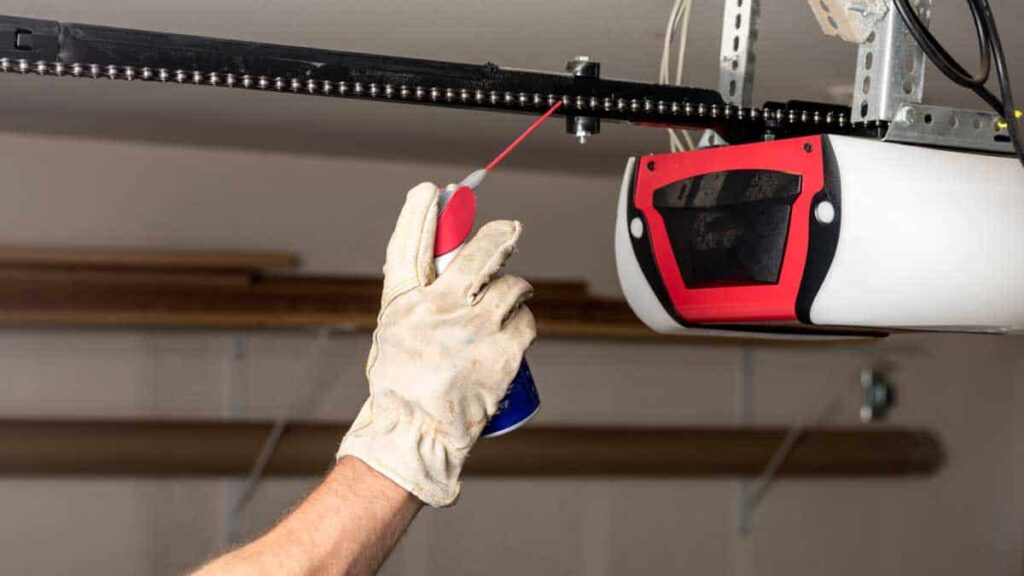
- Lubricating rollers, hinges, and springs with white lithium grease or garage door-specific lubricant (avoid WD-40 as it attracts dirt)
- Testing and cleaning photo-eye sensors with a soft cloth
- Tightening loose bolts and screws on hinges and tracks (without over-tightening)
- Replacing weather seals and bottom rubber if visibly cracked
When DIY Becomes Dangerous
Never attempt these repairs yourself:
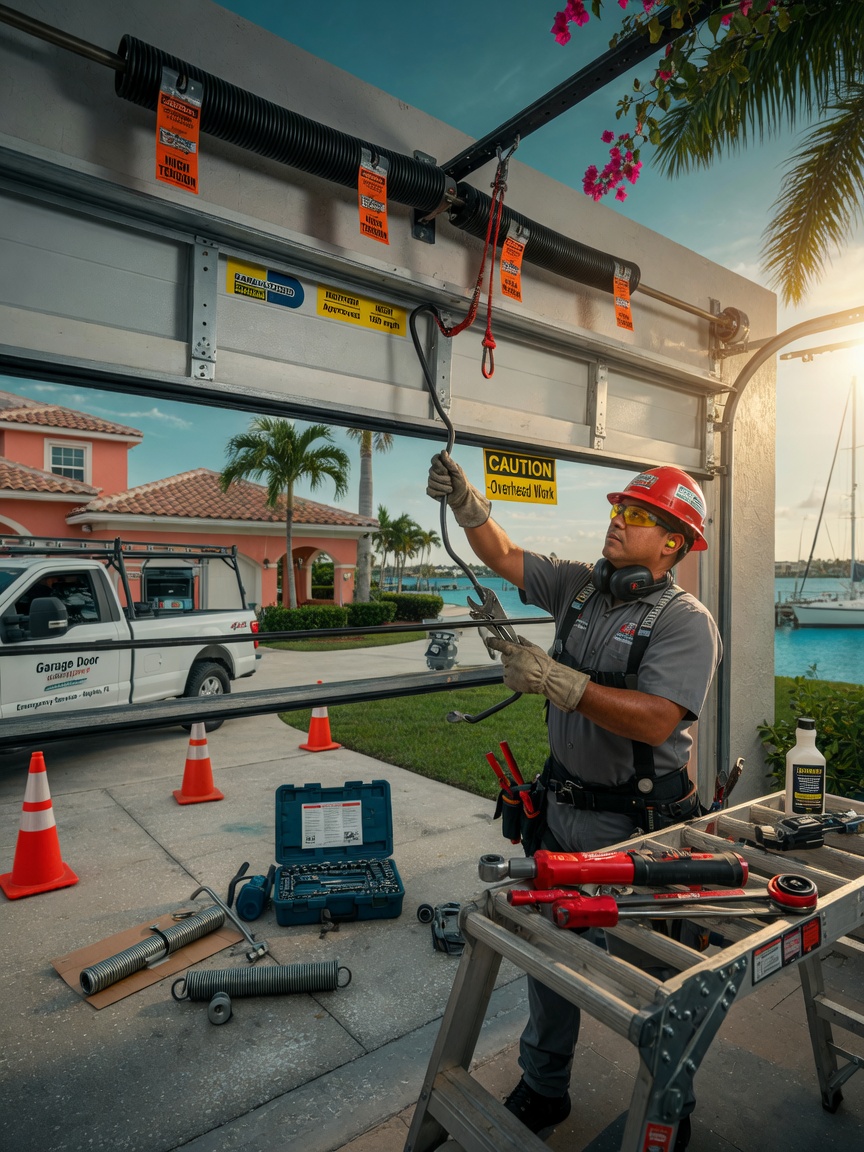
- Replacing torsion springs (stored under 2,000+ pounds of tension)
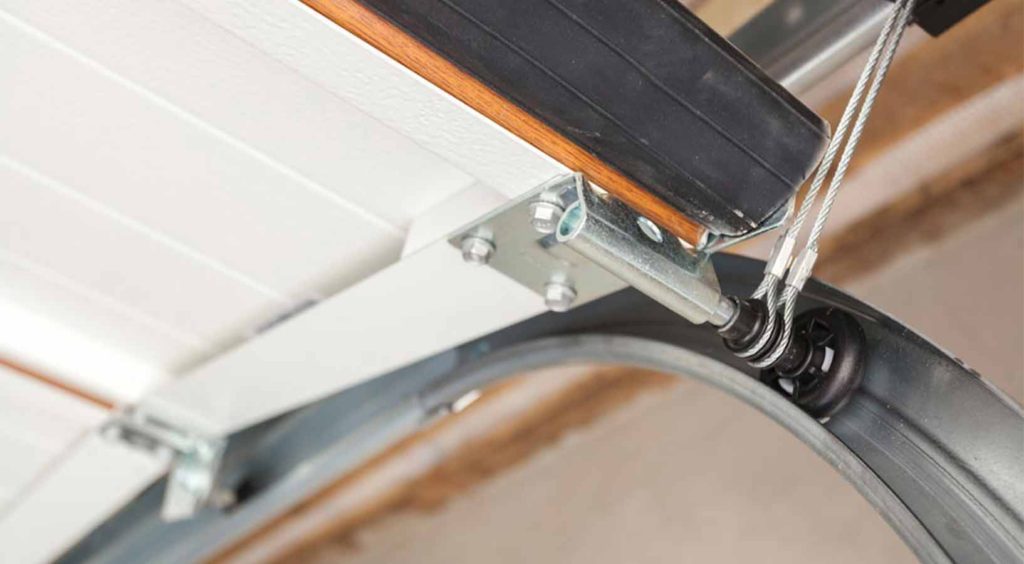
- Repairing or adjusting cables
- Realigning severely bent tracks after storm damage
- Replacing garage door panels on wind-rated doors
- Electrical work on openers exposed to salt air corrosion
Permanent Climate-Adapted Solutions
For long-term performance in Southwest Florida, consider upgrading to:
- Galvanized or stainless steel hardware rated for coastal environments
- Impact-rated garage doors designed for Florida’s high-velocity hurricane zones
- Sealed bearings and rust-proof rollers
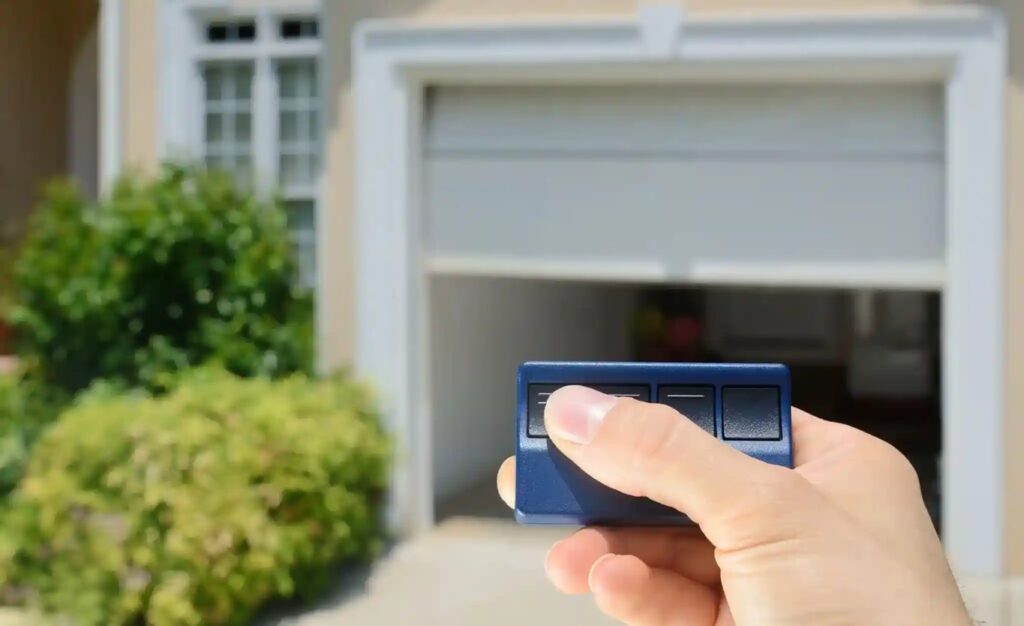
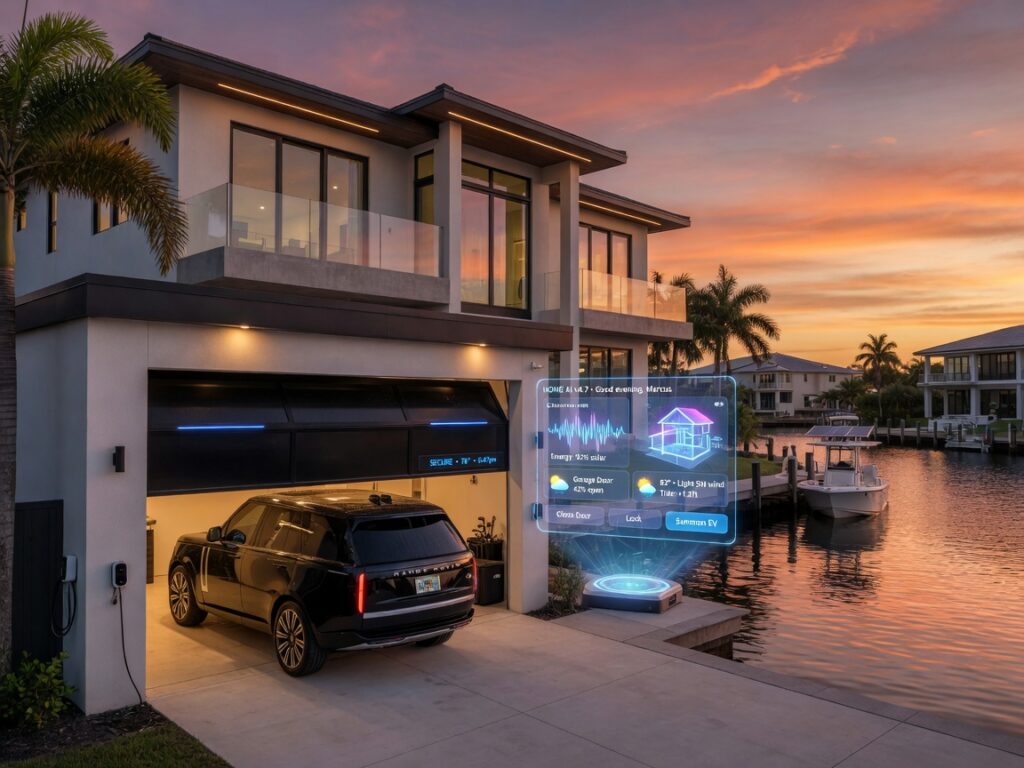
- Smart openers with better humidity resistance
- Marine-grade lubricants reapplied more frequently
When to Call a Certified Technician
Some symptoms demand immediate professional swfl garage door repair. Don’t wait if you notice:
- Any broken spring (even if the door still opens)
- Cables hanging loose or frayed
- The door coming off its tracks
- Opener making loud grinding noises
- Door falling rapidly when manually tested
- Visible structural damage after a storm
Choosing the Right SWFL Garage Door Repair Company
Look for technicians who understand local conditions. A qualified pro should:
- Be familiar with Florida Building Code wind-load requirements
- Carry parts designed for coastal corrosion resistance
- Offer maintenance plans that account for twice-yearly salt and humidity exposure
- Provide same-day emergency service after storms
- Be fully licensed and insured in Florida
Preventing Future Garage Door Problems in Southwest Florida
Prevention is far less expensive than repeated repairs. Implement this SWFL-specific maintenance schedule:
Monthly Tasks
- Visual inspection of springs, cables, and rollers
- Clean photo eyes and test safety features
- Check bottom seal for gaps
Quarterly Tasks
- Thorough cleaning and lubrication using marine-grade products
- Tighten all hardware
- Test door balance and adjust if needed
Annual Professional Service
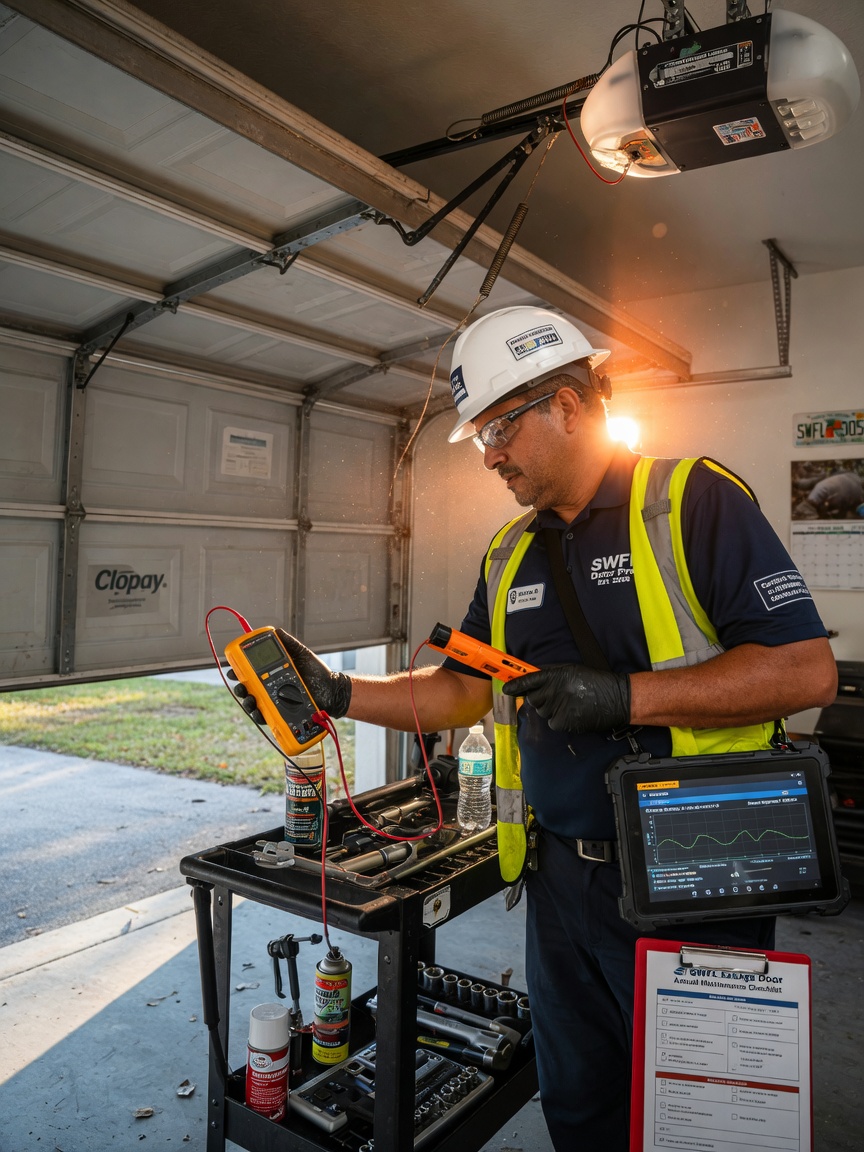
Have a certified technician perform a complete inspection, tune-up, and replace any components showing early signs of salt-induced corrosion before they fail catastrophically.
Conclusion: Protect Your Home and Family
Your garage door is one of the largest moving objects in your home and plays a critical safety role. In Southwest Florida’s harsh environment, staying ahead of garage door problems southwest florida residents commonly face isn’t optional—it’s essential for protecting your family, vehicles, and property.
By understanding how our unique climate accelerates wear, performing regular safe checks, and knowing when to call professionals, you can avoid costly emergency repairs and extend the life of your garage door system significantly.
If your door is showing any of the warning signs discussed, don’t wait until it fails completely. Contact a trusted local technician experienced in florida humidity door failures and coastal conditions. A small investment in proper maintenance and timely repairs will pay dividends in safety, security, and peace of mind for years to come.
Have questions about your specific garage door situation in Cape Coral, Fort Myers Beach, or Naples? The right SWFL garage door repair team will be happy to provide honest guidance without pressure. Your door—and your family—deserve the best care our Florida climate demands.